Striping

Definition and stakes

M. C. Hillick,  Practical Carriage and Wagon Painting

“ The first law with which the novice or learner of the art of striping or ornamenting is confronted is that of color and form. This he must study patiently and persistently, the while practicing with the pencil in order that the purely mechanical part of the art be well mastered. Grace, freedom, sure-handedness, are indispensable factors, as applied to the mechanical features of striping and ornamenting, and these can be attained only through the agency of diligent practice, combined with the help of an eye educated to act quickly and accurately. ”
Source: Gutenberg

James W. Burgess,  A practical treatise on coach-building historical and descriptive (1881)

“ When the panels are to be painted green, blue, or red, and the painter wishes to carry these colours on to the carriage part, it is better to use them for striping only, and let the ground colour be black.
A carriage part painted black may be made to harmonise with any colour used on the body, as the striping colours can be selected so as to produce any desired effect. Brilliant striping can be brought out on dark colours only, while, if the ground colour be light, recourse must be had to dark striping colours to form a contrast.
”
Source: Gutenberg

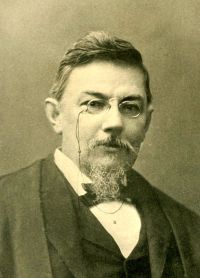
Portrait of Charles Darwin Charles Darwin,  The Variation of Animals and Plants under Domestication… (1868)

“ On the whole I infer that the stripes are generally plainest in the foal, and tend to disappear in old age. The stripes are variable in colour, but are always darker than the rest of the body. They do not by any means always coexist on the different parts of the body: the legs may be striped without any shoulder-stripe, or the converse case, which is rarer, may occur; but I have never heard of either shoulder or leg-stripes without the spinal stripe. ”
Source: Wikisource

Get perspective with Kwize: daily news enlightened by great literature