Water rate

Definition and stakes

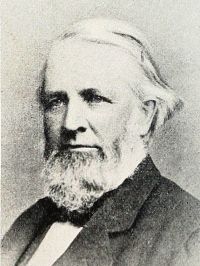
Portrait of Israel C. Russell Israel C. Russell,  North America

“ The winds in passing over the land may be either cooled or warmed, and hence their influence on evaporation is continually changing; but the mean rate of evaporation from an open water body can be determined for a definite time, say a year, for various localities, and thus afford a means of comparison between one region and another. Observation of the mean annual evaporation for various stations, mostly within the United States, have been made, and the result shown by lines drawn through places where the rate is the same. ”

Source: Gutenberg

1911 Encyclopædia Britannica (1911)

“ Amongst causes of variation in the quantity of water needed will be its quality and temperature and rate of flow, the climate, the season, the soil, the subsoil, the artificial drainage, the slope, the aspect and the crop. In actual practice the amount of water varies from 300 gallons per acre in the hour to no less than 28,000 gallons. Where water is used, as in dry and hot countries, simply as water, less is generally needed than in cold, damp and northerly climates, where the higher temperature and the action of the water as manure are of more consequence. ”
Source: Wikisource

Harold E. Babbitt,  Sewerage and Sewage Treatment

“ Experience has shown that water consumption increases after the installation of sewers.
The public water supply is generally installed before the sewerage system. By collecting statistics on the rate of supply of water a fair prediction can be made of the quantity of sewage which must be cared for. The rate of water supply varies widely in different cities. It is controlled by many factors such as meters, cost and availability of water, quality of water, climate, population, etc. In American cities a rough average of consumption is 100 gallons per capita per day.
”
Source: Gutenberg

Get perspective with Kwize: daily news enlightened by great literature