
“ Tenacity of will, or wilfulness, lies at the root of all courage, but courage can only rise into true manliness when the will is surrendered; and the more absolute the surrender of the will the more perfect will be the temper of our courage and the strength of our manliness. ”
Wilfulness
Definition and stakes
The theme of “wilfulness” has been addressed by authors such as Charlotte Marie Mason, Thomas Hughes, Charlotte M. Mason, Charles Kingsley and Alexander Whyte. It is often associated with terms like humility, will, God, virtue and self.
Quotes about “wilfulness”
Charlotte Marie Mason, Home Education (Mason) — Part VI: The Will--The Conscience--The Divine Life In The Child
“ What is Wilfulness?--What, then, is wilfulness, if it be not an exercise of will? Simply this: remove bit and bridle--that is, the control of the will--from the appetites, the desires, the emotions, and the child who has mounted his hobby, be it resentment, jealousy, desire of power, desire of property, is another Mazeppa, borne along with the speed of the swift and the strength of the strong, and with no power at all to help himself. Appetite, passion, there is no limit to their power and their persistence if the appointed check be removed ”
Charlotte M. Mason, Home education (1906)
“ Now, this confusion, in the minds of many persons, between the state of wilfulness and that of being dominated by will, leads to mischievous results even where wilfulness is not fostered nor the child unduly repressed: it leads to the neglect of the due cultivation and training of the will, that almost divine possession, upon the employment of which every other gift, be it beauty or genius, strength or skill, depends for its value. ”
 Charles Kingsley,
Sermons on National Subjects
Charles Kingsley,
Sermons on National Subjects
“ And then you will feel arise in you a hungering and a thirsting after righteousness, a spirit of love, and a desire of doing good, which will carry you up and on, above all that man can say or do against you—above all the laziness, and wilfulness, and selfishness, and cowardice which dwells in the heart of everyone. ”
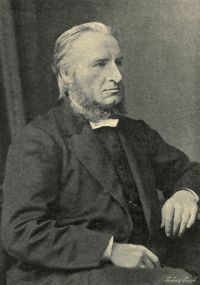 Alexander Whyte,
Bunyan Characters (3rd Series)
Alexander Whyte,
Bunyan Characters (3rd Series)
“ And I turn accordingly to the Heavenly Footman for an excellent illustration of the wilfulness of the will both in a good man and in a bad; as, thus: ‘Your self-willed people, nobody knows what to do with them. We use to say, He will have his own will, do all we can. If a man be willing, then any argument shall be matter of encouragement; but if unwilling, then any argument shall give discouragement. The saints of old, they being willing and resolved for heaven, what could stop them? ”
 Charlotte M. Yonge,
Dynevor Terrace; Or, The Clue of Life…
Charlotte M. Yonge,
Dynevor Terrace; Or, The Clue of Life…
“ A time had come when childish vanity and frivolity were verging on levity and imprudence. Expostulations fell powerless on her shallowness. Painful was the remembrance of the deprecating roguish glance of the beautiful eyes, and the coaxing caresses with which she kissed away the lecture, and made promises, only to forget them. She was like the soulless Undine, with her reckless gaiety and sweetness, so loving and childish that there was no being displeased with her, so innocent and devoid of all art or guile in her wilfulness, that her faults could hardly bear a harsher name than follies. ”
A Selection of Cases on the Law of Torts (1893)
“ The theory of contributory negligence, as a defence, is that, conjointly with negligence on the part of the defendant, it conduces to the damnifying result, and defeats any action, the gravamen of which is such negligence. If defendant’s conduct is not merely negligent, but worse, there is nothing for plaintiff’s want of care to contribute to—there is no lack of mere prudence and diligence of like kind on the part of defendant to conjunctively constitute the efficient cause. Mere negligence on the one hand cannot be said to aid wilfulness on the other. ”
 William Wilberforce,
A Practical View of the Prevailing Religious System of Professed Christians…
William Wilberforce,
A Practical View of the Prevailing Religious System of Professed Christians…
“ Can we, from motives of kindness, incur or risk the charge of being deficient in spirit, in penetration, or in foresight? Do we tell another of his faults, when the communication, though probably beneficial to him, cannot be made without embarrassment or pain to ourselves, and may probably lessen his regard for our person, or his opinion of our judgment? Can we stifle a repartee which would wound another; though the utterance of it would gratify our vanity, and the suppression of it may disparage our character for wit? ”
William Wilberforce,
A Practical View of the Prevailing Religious System of Professed Christians…
“ What judgment then shall we form of the force of the benevolence of the age, when measured by this standard? How does it stand the shock, when it comes into encounter with our pride, our vanity, our self-love, our self-interest, our love of ease or of pleasure, with our ambition, with our desire of worldly estimation? Does it make us self-denying, that we may be liberal in relieving others? Does it make us persevere in doing good in spite of ingratitude; and only pity the ignorance, or prejudice, or malice, which misrepresents our conduct, or misconstrues our motives? ”
William Wilberforce,
Private Papers of William Wilberforce
“ The grand preparation that is needed is, Humility: that sense of our own infirmities and our own weakness, which is felt by every true, at least by every flourishing Christian. We read in the Scripture that 'our hearts are deceitful above all things:' by which is meant, that we are all prone to flatter ourselves, to form too high an estimate of our own good qualities, and too low an idea of our bad ones. ”
“ Could you see what every stirring of pride does to your soul, you would beg of everything you meet to tear the viper from you, though with the loss of a hand or an eye. Could you see what a sweet, divine, transforming power there is in humility, how it expels the poison of your nature, and makes room for the Spirit of God to live in you, you would rather wish to be the footstool of all the world than want the smallest degree of it. ”
William Wilberforce,
A Practical View of the Prevailing Religious System of Professed Christians…
“ In such a temper of mind, the pomps and vanities of life are cast behind us as the baubles of children.—We lose our relish for the frolics of gaiety, the race of ambition, or the grosser gratifications of voluptuousness. In the case even of those objects, which may more justly claim the attention of reasonable and immortal beings; in our family arrangements, in our plans of life, in our schemes of business, we become, without relinquishing the path of duty, more moderate in pursuit, and more indifferent about the issue. ”
 Ella Wheeler Wilcox,
Poems of Experience — Most blest is he
(1917)
Ella Wheeler Wilcox,
Poems of Experience — Most blest is he
(1917)
“ Not till thy will, thy courage, and thy strength Have done their utmost, and thy love has flowed In pity and compassion, out to all (The worthless, the ungrateful, and the weak, As well as to the worthy and the strong) Canst thou receive invisible support. Do first thy part, and all of it, before Asking the helpers to do aught for thee. For this alone the Universe exists, That man may find himself is Destiny. ”
 Jean-Baptiste Massillon,
Sermons
(1879)
Jean-Baptiste Massillon,
Sermons
(1879)
“ And you, with a heart already half seduced, with inclinations at least bordering upon guilt, would wish your weakness to be proof against all attacks, and the most powerful temptations to find you always tranquil and inaccessible? You would wish, with your lukewarm, sensual, and worldly morals, that on these occasions your soul should be gifted with that strength and faith which even the most tender and watchful piety sometimes cannot give? ”
William Wilberforce,
Private Papers of William Wilberforce
“ You will not suspect me of thinking lightly of any moral or religious motives which guide you. As little will you believe that I think your understanding or judgment easily misled. But forgive me if I cannot help expressing my fear that you are nevertheless deluding yourself into principles which have but too much tendency to counteract your own object, and to render your virtues and your talents useless both to yourself and mankind. ”
William Wilberforce,
A Practical View of the Prevailing Religious System of Professed Christians…
“ But we every where discover the same principle reduced to the dimensions of common life, and modified and directed according to every one’s sphere of action. We may discover it in a supreme love of distinction, and admiration, and praise; in the universal acceptableness of flattery; and above all in the excessive valuation of our worldly character, in that watchfulness with which it is guarded, in that jealousy when it is questioned, in that solicitude when it is in danger, in that hot resentment when it is attacked, in that bitterness of suffering when it is impaired or lost. ”
 Robert W. Chambers,
The Streets of Ascalon: Episodes in the Unfinished Career of Richard Quarren…
Robert W. Chambers,
The Streets of Ascalon: Episodes in the Unfinished Career of Richard Quarren…
“ With every instinct inherent and self-inculcated, instincts of modesty, of reticence, of self-control, of pride, she quivered under this fierce humiliation born of self-knowledge—knowledge scornfully admitted and defied with every breath—but no longer denied. ”
William Wilberforce,
A Practical View of the Prevailing Religious System of Professed Christians…
“ Is our love superior to envy, and jealousy, and emulation? Are we acute to discern and forward to embrace any fair opportunity of promoting the interests of another; if it be in a line wherein we ourselves also are moving, and in which we think our progress has not been proportioned to our desert? Can we take pleasure in bringing his merits into notice, and in obviating the prejudices which may have damped his efforts, or in removing the obstacles which may have retarded his advancement? ”
 Mary Wollstonecraft,
The Love Letters of Mary Wollstonecraft to Gilbert Imlay
Mary Wollstonecraft,
The Love Letters of Mary Wollstonecraft to Gilbert Imlay
“ Yet your understanding or mine must be strangely warped—for what you term “delicacy,” appears to me to be exactly the contrary. I have no criterion for morality, and have thought in vain, if the sensations which lead you to follow an ancle or step, be the sacred foundation of principle and affection. Mine has been of a very different nature, or it would not have stood the brunt of your sarcasms. [Pg 177] The sentiment in me is still sacred. If there be any part of me that will survive the sense of my misfortunes, it is the purity of my affections. ”
 Neith Boyce,
The Bond
(1908)
Neith Boyce,
The Bond
(1908)
“ The will to live, of life conscious and unconscious, the physical instinct, cruel, wasteful, and careless—at times it seemed to her to make of human beings mere foolish puppets, without will or dignity. ”
 I. A. R. Wylie,
The Kiss
(1923)
I. A. R. Wylie,
The Kiss
(1923)
“ However strong and courageous they may be—and I take it that courage and strength are two of the virtues you have in mind—they are at the mercy of their vices and, for that matter, at the mercy of pure virtue. ”

“ I would sooner say, or hear it said of me, that I was so typical a child of my age, that in my perversity, and for that perversity’s sake, I turned the good things of my life to evil, and the evil things of my life to good.What is said, however, by myself or by others, matters little. The important thing, the thing that lies before me, the thing that I have to do, if the brief remainder of my days is not to be maimed, marred, and incomplete, is to absorb into my nature all that has been done to me, to make it part of me, to accept it without complaint, fear, or reluctance. ”
“ The other, what utter impotence there is in all our efforts, and in all our prayers too for God's help, to destroy the hideous monster. Blessed the man who now learns to put his hope in God, and to persevere, notwithstanding all the power of pride within him, in acts of humiliation before God and Men. We know the law of human nature: acts produce habits, habits breed dispositions, dispositions form the will, and the rightly-formed will is character. It is not otherwise in the work of grace. ”
Roger Williams, The Bloudy Tenent of Persecution for Cause of Conscience Discussed and Mr…
“ Will-worship varnished over with the glittering show of humility. Spiritual pride may swell, out of the sense of a man’s humility. Humility most unseasonable in setting up will-worship, or persecuting others. ”
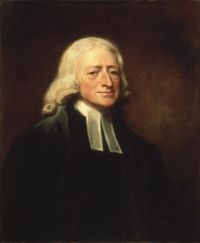 John Wesley,
The works of the Rev. John Wesley…
(1771)
John Wesley,
The works of the Rev. John Wesley…
(1771)
“ Yea, and let him be cloathed with humility, filling his heart, and adorning his whole behaviour. At the same time, let him put on bowels of mercies, gentleness, long-suffering: avoiding the least appearance of malice, bitterness, anger or resentment; knowing, it is our calling, not to be overcome of evil, but to overcome evil with good. In order to preserve this humble, gentle love, it is needful to do all things with recollection of spirit, watching against all hurry, or dissipation of thought, as well as against pride, wrath, or surliness. ”
William Wilberforce,
A Practical View of the Prevailing Religious System of Professed Christians…
“ Who would think that the kindness and humanity, and self-denial, and patience in suffering, which we so drily commend, had been exerted towards ourselves, in acts of more than finite benevolence of which we were to derive the benefit, in condescensions and labours submitted to for our sakes, in pain and ignominy, endured for our deliverance? ”
 Samuel Johnson,
The Rambler
(1801)
Samuel Johnson,
The Rambler
(1801)
“ He therefore that would govern his actions by the laws of virtue, must regulate his thoughts by those of reason; he must keep guilt from the recesses of his heart, and remember that the pleasures of fancy, and the emotions of desire, are more dangerous as they are more hidden, since they escape the awe of observation, and operate equally in every situation, without the concurrence of external opportunities. ”
Marion Foster Washburne, Study of Child Life
“ If I a willful, he sets his will against mine, one for one, and leaves me, if I please, the degradation of beating him by my superiority of strength. But, if I renounce my will and act for the soul, setting that up as an umpire between us two, out of his young eyes looks the same soul; he reveres and loves with me. ”

“ We confess our weakness to any [64] one because that permits us to indulge in it—but when we see in another goodness, strength, virtue, we worship it. You may bind us to you with bands of iron by your virtues—never, as all foreigners think, by your vices. ”
The World English Bible — James
“ Let him show by his good conduct that his deeds are done in gentleness of wisdom. 14 But if you have bitter jealousy and selfish ambition in your heart, don't boast and don't lie against the truth. 15 This wisdom is not that which comes down from above, but is earthly, sensual, and demonic. 16 For where jealousy and selfish ambition are, there is confusion and every evil deed. 17 But the wisdom that is from above is first pure, then peaceful, gentle, reasonable, full of mercy and good fruits, without partiality, and without hypocrisy. ”
William Wilberforce,
A Practical View of the Prevailing Religious System of Professed Christians…
“ Love and humility will concur in producing a frame of mind, not more distinct from an ardent thirst of glory, than from that frigid disregard, or insolent contempt, or ostentatious renunciation of human favour and distinction, which we have sometimes seen opposed to it. These latter qualities may not infrequently be traced to a slothful, sensual, and selfish temper; to the consciousness of being unequal to any great and generous attempts ”
Matthew Henry, Commentary on the Whole Bible… (1700s)
“ We must distinguish between the weak and the wilful. [1.] Of some we must have compassion, treat them with all tenderness, restore them in the spirit of meekness, not be needlessly harsh and severe in our censures of them and their actions, nor proud and haughty in our conduct towards them ”
 William Whewell,
The Plurality of Worlds
William Whewell,
The Plurality of Worlds
“ Appetite, Desire, Anger, Lust, Greediness, Envy, Malice, impel him to courses which are vicious. But these impulses he is capable of resisting and controlling;—of avoiding the vices and practising the opposite virtues;—and of rising from one stage of Virtue to another, by a gradual and successive purification and elevation of the desires, affections and habits, in a degree, so far as we know, without limit. ”
Richard Baxter, A Christian Directory, Part 1: Christian Ethics
“ VI. Remember that your eye is of all the senses most subject to the will, and therefore there is the more of duty or sin in it; for voluntariness is the requisite to morality, both good and evil. Your will cannot so easily command your feeling, tasting, hearing, or smelling, as it can your sight; so easily can it open or shut the eye in a moment, that you are the more unexcusable if it be not governed; for all its faults will be proved the more voluntary. ”
 Lorenzo Scupoli,
The Spiritual Combat
(1875)
Lorenzo Scupoli,
The Spiritual Combat
(1875)
“ For if in all cases we need the virtue of humility in order to overcome our enemies, we must exercise it in this more than in any other; this vice being, as a rule, the punishment of pride. 3. When the temptation has gone, you must act in this way:—However free, and however secure you fancy yourself to be from all danger, yet keep your mind far away from those subjects which may have occasioned the temptation, even should you feel an inducement to do otherwise for the sake of some good and virtuous end. ”
