AI-generated from sources
Convinced but Not Enlightened, the Long Divorce of Proof and Understanding
In Brief
- Mathematics carries two ideals of proof that do not always coincide: one compels assent so that no one can refuse the conclusion, the other shows why the conclusion holds.
- The 19th-century drive for rigor recast mathematical certainty as certainty of inference, checkable step by step, at the price of losing sight of why questions are asked.
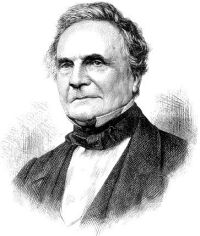
- As early as 1834, an essay on Charles Babbage's calculating engine foresaw machines giving the numerical solution of a problem before its analytical solution was known.
- When certainty can be delegated, what stays with the mathematician is understanding: grasping principles, judging what is worth proving, seeing why a result holds, though this varies from mind to mind and still needs rigor.
Main authors


A proof can be accepted, then forgotten, and the theorem still stands. Schopenhauer turned this ordinary experience into a charge against the whole method of geometry. The certainty of a geometrical proposition, he argued, rests on a necessity grasped in perception. The logical demonstration is foreign to the matter, "generally soon forgotten, without weakening our conviction" [1]. The remark points to a fissure older than any machine. What persuades us that a statement is true is not necessarily what lets us see why it is true.
That fissure runs through the history of proof. One ideal asks a demonstration to compel assent, so that no reader, however reluctant, can refuse the conclusion. The other asks it to show the reason, so that the reader comes away understanding. For a long time the two cohabited. Then the drive toward rigor favored the first, and the calculating engines of the 19th century raised the prospect of results obtained by mechanism before anyone held their analysis [2]. A proof that compels and that no one follows does not invent the divorce between conviction and insight. It completes it, and in doing so it shifts the worth of mathematics away from certainty, which can be delegated, toward understanding, which is much harder to hand over.
Schopenhauer against Euclid, two ideals of proof
The first quarrel is philosophical: is a proof the source of knowledge, or only its certificate? Schopenhauer answered bluntly. Perception, for him, is the primary source of all evidence, and every concept placed between the mind and the thing is an occasion for deception [3]. Measured by that standard, the method Euclid established, in which each proposition is reached through a chain of logical steps, struck him as strange, even perverted. He demanded that every logical proof be traced back to an origin in perception [3]. Proof, in this view, is legitimate only as a road back to seeing.
Hegel moved the objection from the reader to the object itself. A theorem, once proved, is seen to be true. But that seeing, he observed, concerns only the relation of the result to the knowing subject, not the content of the theorem [4]. The construction that establishes a property of the right-angled triangle is carried out beside the triangle; the triangle's own nature does not break up into the factors the construction sets forth [4]. The proof is scaffolding. It compels, yet it does not belong to what it proves, and on this point the two philosophers, opposed on so much else, agree.
The same intuition resurfaces, in a devotional register, in a book of religious reflection by Richard La Rue Swain. "Even in mathematics we do not prove, we see," he writes [5]. What is called proof merely separates the elements of a condensed proposition so that each can be recognized in turn [5]. Elsewhere he calls it an accelerated way of looking, which sharpens our intelligence without strictly proving anything [6]. The claim overstates its case, and it serves a book about God rather than a treatise on logic. But it names exactly the ideal that the logician sets aside: a proof is worth what it lets us see.
The rival ideal has its own genealogy, and it begins in distrust. Schopenhauer himself conceded that logical proof entered geometry for a reason. Geometrical figures are perceived in space, and the suspicion that such perception might be merely empirical, possibly illusory, led geometers to replace seeing with deduction [7]. Arithmetic, which rests on counting in time, escaped that suspicion in his account [7]. The compelling proof thus starts as a defense against the eye. Its force became proverbial. An essayist in The Atlantic Monthly in 1858 observed that there is "no elasticity in a mathematical fact": whatever collides with it goes to pieces, and knowledge so absolute might even breed a despotic habit of mind [8].
Russell's palace, or the triumph of rigor
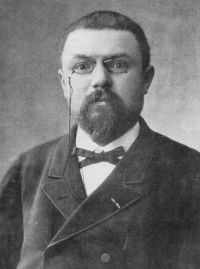
Over the following decades, the balance tipped toward compulsion. Poincaré noted that since the middle of the previous century mathematicians had grown ever more eager for absolute rigor, and he judged them right [9]. His formula holds both sides at once: "In mathematics rigor is not everything, but without it there is nothing" [9]. Bertrand Russell was less even-handed. A proof that lacks rigor is defective, he wrote, and it is no defense to plead that common sense shows the result to be correct. Once the premises are laid down, no appeal to intuition should be needed [10]. The ideal of compulsion had found its doctrine.
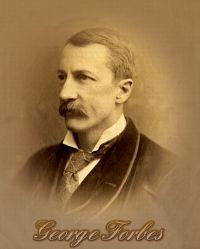
That doctrine changes what mathematical certainty means. John Stuart Mill had argued that, outside pure Number, the certainty ascribed to geometry and even mechanics is nothing but certainty of inference: the conclusion is guaranteed if the premises hold, and no more [11]. Russell went further, claiming that pure mathematics contains no indefinable ideas and no unprovable propositions except those of general logic [12]. The consequence is considerable. If every step reduces to logic, checking a proof becomes a matter of verifying links in a chain, which calls for care rather than insight. George Forbes, in a history of astronomy, recorded a telling view: many people take our need for cumbrous demonstrations as proof that the human mind is a feeble logical machine [13]. The mind was now being measured as a logical machine.
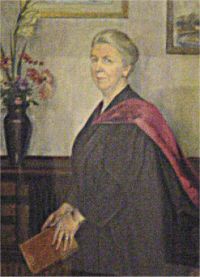
The price of this victory was paid in understanding. A contributor to Popular Science Monthly in 1906 described it precisely. In becoming rigorous, mathematics takes on an artificial character and forgets its historical origins; "we see how the questions can be answered, we no longer see how and why they are put" [14]. Logic, he concluded, is not enough, and intuition must remain its complement, even its antidote [14]. A psychologist's objection, reported by Eleanor Jourdain, makes the same point from the learner's side. The short cuts that free the mathematician tend toward a mechanical method in which the thinker is aware only of premises and results, and the concept replaces the real idea [15].
Yet rigor did not only compel; it could also reveal. Russell described the discovery that all mathematics follows from a small collection of fundamental laws as a revelation for anyone weary of fragmentary chains of deduction [16]. He likened it to a palace emerging from the autumn mist before a traveller climbing an Italian hillside, its storeys appearing in due order and proportion [16]. Here the logical ideal yields a vision of the whole. Josiah Royce, writing in 1899, noted another twist: the modern mathematician doubts any proof unless he is first shown the actual construction of the ideal object it concerns [17]. The divorce, then, was never a simple opposition between logic and insight. It opened inside rigor itself, between the chain checked link by link and the architecture grasped at once.
Babbage's engine, or the answer before the analysis
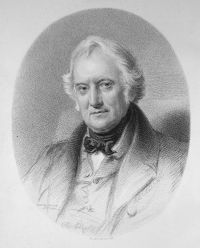
The calculating engine carried the divorce out of philosophy and into machinery. An 1834 essay on Charles Babbage's project summed up its ambition as a proposal "to throw the powers of thought into wheel-work" [18]. Its author added a revealing admission. Bringing such a project within the compass of popular belief was hard; bringing it within popular comprehension was impossible [18]. From the start, the project had to win belief in its practicability without comprehension. The aspiration was not confined to engineers: John Henry Newman described the hope behind algebra and logical inference as the search for an infallible rule that might supersede personal gifts [19].
The same essay drew a consequence more unsettling for mathematics itself. An engine set to a law of differences would produce any distant term required, giving the numerical solution of a problem "even though the analytical solution be yet undetermined" [2]. The result arrives before the reason, and independently of it. The author concluded that some branches of mathematical inquiry would henceforth be guided in part by the dictates of mechanism [2]. A text from 1834 thus already pictured a mathematics whose answers could outrun its explanations.
The inventor was more cautious about what his machines could establish. Babbage noted in his memoirs of 1864 that the Analytical Engine of fifty figures could not prove that a computed number had passed through infinity; it showed only that the number had outgrown fifty places [20]. William Stanley Jevons drew a sharper lesson from another of Babbage's demonstrations. A machine could produce a perfectly regular series through a vast number of steps, then break its law at any chosen point; no number of particular cases licenses an inference to the next [21]. A mechanism that computes is not yet a mechanism that proves. An 1837 account in Scientific Memoirs added that Babbage's first machine was merely the expression of one particular theorem of analysis [22]. The understanding lay upstream, with whoever had grasped the theorem.
Why, then, trust a result one has not checked oneself? Because science has always done so in part. Whitehead, in 1925, insisted that any argument applying mathematics must first be scanned for slips, since every mathematician knows from bitter experience how easily a slight error changes everything [23]. The human checker is fallible, which is the strongest argument for checking by rule. Josef Donat observed that the astronomer uses mathematical formulas without examining them anew, and that every scientist builds on the results of his predecessors, which he cannot with reason doubt; presumptions must be made, because not everything can be proved [24]. Delegated certainty is the ordinary condition of knowledge, not an anomaly introduced by machines.
Maxwell's clear ideas, or what the machine leaves to the mind
If certainty can be delegated, what remains to the mathematician? James Clerk Maxwell answered before the question was pressing. Many minds, he observed, take dry calculation for the whole of mathematics, yet the mind never exercises its highest functions when doing the work of a calculating machine [25]. What the man of science seeks is clear ideas of the things he deals with [25]. Poincaré put the conviction in a sharper image: the machine may gnaw on the crude fact, but "the soul of the fact will always escape it" [9].
Understanding, in this tradition, is not an ornament added to the proof but a different kind of knowledge. A maxim gathered in the Philomath's Quotation-Book contrasts mathematics, which many know, with mathesis, which "few know" [26]. Knowing propositions and drawing obvious deductions from them is one thing; grasping the nature of the science and its universal principles is another [26]. The same text makes that grasp the source of facility in working out problems and their proofs. Insight does not merely follow the proof; it produces proofs. Hermann Grassmann, quoted in the same collection, turned the point against bad teaching: a proof which is no proof either stays unintelligible to the pupil or deceives him with an appearance of knowledge [27].
Understanding also governs a choice that no chain of inference makes: what is worth proving. An address to the International Congress of Arts and Science observed that the mathematician rarely defines what separates a significant system of postulates from a trivial one, yet recognizes the distinction in practice [28]. That judgment, the speaker added, brings him close in spirit to the philosopher. Another maxim from the Quotation-Book asks for tact and good taste at every step, and warns against becoming the slave of one's symbols rather than keeping in mind the realities they express [29]. Neither text imagines a machine. Both place the mathematician's distinctive contribution exactly where verification ends.
This relocation has its own weakness, and early critics of rigor saw it. Another passage in the same 1906 volume of Popular Science Monthly notes that mathematicians do not resemble one another: some recognize only implacable logic, others see intuition as the only source of discovery [30]. Its author allows that this would be a reason for distrust, and asks whether a truth that is not the same for all can still be truth [30]. Understanding is personal and plural; certainty, at least, is shared. That is why Poincaré, for all his reservations about logic, still held that a demonstration without rigor is nothingness [9]. The worth of mathematics may shift toward understanding, but understanding cannot dispense with the compelling proof that keeps it honest.
Two ideals of proof have long coexisted in mathematics. One asks a demonstration to compel assent, so that no one can refuse its conclusion; the other asks it to show why the conclusion holds. Philosophers such as Schopenhauer and Hegel already held that the logical chain stands outside what it proves. The push for rigor in the 19th and early 20th centuries then made mathematical certainty a matter of inference, checkable step by step, at the cost of forgetting why questions were asked. The calculating engines of the same century had already raised a further prospect: a machine could deliver a numerical answer before anyone possessed the analysis behind it.
Such results do not abolish mathematical knowledge; they redistribute it. Certainty can be shared with a mechanism, as science has always taken much of it on trust from predecessors and formulas. What remains with the mind is the grasp of principles, the judgment of which questions matter, and the sight of why a result must hold. That understanding is fragile, varies from one mathematician to another, and still needs rigor to answer for it. A machine can make us certain; only understanding makes the certainty ours.