AI-generated from sources
Kinship and Kingdom, Primate Emotions and the Human Divide
In Brief
- Complex emotional states like jealousy, rage, and profound affection in primates systematically dismantle the traditional barrier between human and animal consciousness.
- The long-standing debate on human uniqueness centers on whether the documented similarities in love, memory, and reason constitute a difference merely in degree or a fundamental difference in kind.
- Arguments for human exceptionalism often rely on abstract morality, reason, and spiritual belief, portraying animal family structures and instincts as crude precursors.
- Anthropocentric biases frequently distort the perception of animal mental states, leading humanity to patronize animals for an imagined incompleteness instead of recognizing them as whole beings.
Main authors


The recognition of complex emotional states such as jealousy, rage, and profound affection in primates compels a critical re-evaluation of humanity's place in the natural order [1, 2, 3]. For centuries, a sharp dividing line was presumed to exist, separating human consciousness from what was considered the instinct-driven world of animals. However, observations by naturalists, including Charles Darwin, have systematically dismantled this barrier, revealing that higher animals not only experience pleasure and pain but also engage in sophisticated social and emotional interactions [4]. The intricate maternal care exhibited by monkeys, the apparent grief of a primate parent, and the desire for affection all point toward a shared emotional landscape rather than a uniquely human one [5, 7].
This growing acknowledgment of shared feeling creates a significant philosophical tension. While the evidence for a continuum of emotional and intellectual faculties between humans and other higher animals becomes more robust, it conflicts with a persistent cultural and intellectual need to assert human exceptionalism [9, 10]. The debate has shifted from a simple question of whether animals feel to a more nuanced exploration of the nature and complexity of those feelings. The core of the issue is whether the documented similarities in love, memory, and reason constitute a difference merely in degree, as Darwin suggested, or if a fundamental distinction—a difference in kind—still holds true, preserving a unique status for humanity .
A Shared World of Feeling
Pioneering naturalists and scientists provided extensive documentation suggesting a profound emotional continuity between humans and other animals. In the 19th century, observers like George John Romanes detailed behaviors in monkeys that strongly indicated complex feelings, describing fits of rage and acts of brooding, deliberate revenge . Charles Darwin similarly noted that jealousy over a master's affection was evident in both dogs and monkeys, interpreting this as a sign that animals not only feel love but also possess a desire to be loved in return . These accounts frame animal emotionality not as simple reflex but as a sophisticated internal state comparable to that experienced by humans.
The capacity for deep social and familial bonds further blurs the line between human and animal experience. Some anthropoid apes are described as living in stable, often monogamous family units where paternal care and mutual affection are central to the group's dynamic, mirroring idealized human structures [6]. The maternal instinct, in particular, serves as a powerful point of comparison, with primate mothers observed nursing, cleaning, disciplining, and comforting their young with a tenderness and diligence akin to human parents . More dramatic accounts even suggest that a primate can experience a form of heartbreak or disconsolate grief upon losing a child, refusing to eat and losing the will to live .
This body of evidence has led numerous thinkers to conclude that the mental and emotional differences between humanity and higher animals are matters of degree, not of fundamental kind . Thomas Henry Huxley argued that no absolute structural or psychological line could be drawn, proposing instead that the highest human faculties of feeling and intellect begin to germinate in lower forms of life . Taking this idea further, some scholars like Auguste Forel contended that certain animals, such as monkeys and parrots, might even exhibit more intense sentiments of sympathy, duty, and fidelity than the average human [11]. The capacity for actions motivated by pure affection, which can be observed even in a companion dog, is presented as potential evidence of a rudimentary moral sense [8, 12].
The Citadel of Human Uniqueness
Despite compelling evidence of shared capacities, a powerful counter-narrative has long sought to preserve a unique and elevated status for humanity. This perspective often frames animals through a lens of deficiency, suggesting a mournful quality in their eyes that stems from having been denied a soul [13]. From this viewpoint, as articulated by John Ruskin, the very ability of humans to feel ashamed of a possible simian ancestry and to instinctively recognize a hierarchy of noble and base is itself proof of human worthiness and a fact of profound significance [14]. This innate sense of superiority forms the bedrock of human exceptionalism.
Justifications for this distinct status are frequently anchored in faculties deemed uniquely human, such as abstract morality, reason, and spiritual belief. While animal family structures may show affection, they are sometimes dismissed as a mere preliminary sketch of the human family, which is seen as ennobled by laws of duty and right that animals cannot comprehend [15]. Human love is similarly elevated as a poetic ideal, a culturally trained sentiment that has transcended the supposedly crude "animal instinct" over generations [17]. This instinct in animals is often characterized as a mysterious force that operates outside the bounds of reason, capable of remarkable feats but ultimately falling short of true intellect [18]. Even Darwin, a proponent of evolutionary continuity, suggested that disinterested love for all creatures was a noble attribute beyond the grasp of non-human minds [19].
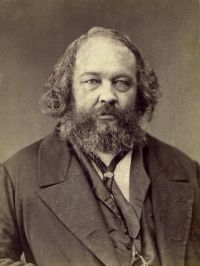
Ultimately, this assertion of uniqueness often culminates in the celebration of the human mind and its capacity for progress. Thinkers like Mikhail Bakunin have framed human history as a heroic journey away from "primitive animality" and into the "light of the mind" [20]. Superior brain development is identified as the key trait accounting for all significant distinctions, enabling humans to think, create, and transform the world, while animals are relegated to a destiny of mere vegetation and feeding [21, 22]. It is this cognitive difference that is said to separate human association from the gregariousness of animals and that allegedly leaves primates without the courage to face cosmic mysteries without the aid of religious creeds [16].
The Corpse in the Cargo
The entire debate over human uniqueness is fraught with inherent anthropocentric biases that shape our conclusions. As C. Lloyd Morgan observed, our inability to conceive of animal mental states in any terms other than our own human consciousness means we are almost always lost when we try to understand them [27]. This leads to a distorted perception where, as Henry Beston wrote in the early 20th century, we patronize animals for an imagined incompleteness, failing to see them as whole beings because we insist on using ourselves as the universal measure [23]. This perspective forgets that humanity itself began in a state of profound animal ignorance, forced to learn everything from scratch without any external teacher [28].
A more integrated view acknowledges that many human traits—both admirable and lamentable—are deeply rooted in our evolutionary past. Instincts like blind resentment and jealousy, for instance, are likely survivals from an ancestral state where they served a crucial purpose in self-preservation, however unjust they may seem in modern society [24]. In a vivid metaphor, J. Howard Moore described civilization as a ship carrying a "corpse in its cargo," referring to the powerful, elemental passions and appetites inherited from our animal nature [25]. According to this view, moral progress is not a radical break from our past but a continuous and difficult process of managing and sloughing off this inherited animality .
This process of reconciliation fosters a more nuanced understanding of both humanity and the animal kingdom. It challenges the notion that we should deny intellect and feeling in animals simply because human intellect is superior, a position criticized as being blinder than the impulse it purports to explain [29]. Instead, it opens the possibility, as George John Romanes suggested, that the very "germs of a moral sense" can be observed in highly intelligent and sympathetic animals, indicating a difference in developmental stage rather than in kind [26]. The true measure of humanity, therefore, may not lie in denying its biological origins, but in consciously grappling with this uneasy reflection, striving to build upon—rather than simply negate—the very nature that connects us to all sentient life .
The rich emotional lives observed in primates and other animals present a formidable challenge to traditional definitions of humanity. Evidence of complex feelings like jealousy, love, and grief systematically erodes the presumed barrier between human and non-human consciousness, pointing instead toward a continuum of intellect and sentience . This scientific and philosophical acknowledgment of kinship directly confronts a deeply ingrained cultural imperative to maintain human exceptionalism, a status historically defended on the grounds of superior morality, abstract reason, or a unique spiritual essence . The resulting tension reveals that the modern debate is less about the objective capacities of animals and more about the subjective foundations of humanity's self-concept.
Resolving this tension requires moving beyond flawed anthropocentric yardsticks and accepting that our own behaviors, from our highest virtues to our most destructive passions, are inextricably linked to our evolutionary heritage . Instead of viewing animals as incomplete or inferior versions of ourselves, a more enlightened perspective would appreciate them as complex beings in their own right . The ultimate question is not whether humans are distinct, but how that distinction is defined. Perhaps true human exceptionalism is found not in a final escape from our animal past, but in the conscious, ongoing struggle to understand, manage, and elevate the instincts and emotions that affirm our universal kinship with the broader community of life .