AI-generated from sources
Renan, Fichte and the unfinished quarrel over what makes a nation
In Brief
- Defining the nation by language rather than blood did not free it from descent: a mother tongue can be learned, but it is usually learned from parents.
- Ernest Renan, the French thinker who wanted a nation's existence to be a daily plebiscite, also held that all ages of a nation are leaves of one book and that no one serves a country by disparaging its founders.
- A popular vote taken at a single moment can be skewed: if a ruling power makes life intolerable for the old inhabitants, the head count rewards whoever has driven them out.
- Ancestry did not vanish with the scientific rejection of race, and civic writers taught that a citizen may adopt the founders of his state as his own ancestors, provided he honors their memory.
Main authors


Two formulas have long stood for two ideas of the nation. The first is Ernest Renan's, as Romain Rolland passes it on: the existence of a nation should be "a daily plebiscite" [1]. The second belongs to Johann Gottlieb Fichte, who describes a fatherland drawn by speech rather than by frontiers. Wherever German was spoken, he writes, anyone born within its domain was a citizen twice over—of the state of his birth and of the whole German nation [2]. One formula seems to make belonging a matter of consent, the other a matter of what one is born into. From that contrast grew a durable classification. A scholar writing in 2016, long after both men, sets ethnic nations, which mark out culture by ancestry and race that cannot be gained or learned, against cultural nations, which pursue the assimilation of minorities [3].
The texts that carried this debate do not sit easily in such boxes. The nation of will, in Renan's own pages, keeps turning toward its founders [4]. The nation of language, for all its talk of birth, rests on a tongue Fichte feared could be lost by the third generation once political independence was gone [5]. And dismantling race as a basis for nationality did not abolish ancestry, which the texts also present as memory, duty, or a lineage one could adopt [6, 7]. The opposition between blood and plebiscite was never a choice between two sealed models. It was a long argument over how much of the past a free choice must carry, and over who is entitled to call the dead their own.
Fichte and the fatherland of the mother tongue
Language rose as a criterion of nationality largely because race had failed as one. Leon Dominian, in his study of Europe's linguistic frontiers, states the reasoning plainly. Races lie scattered unevenly across the map, often grouped by class, so race cannot serve as a test, and one is "compelled to resort to language" [8]. Fichte's fatherland follows the same logic with greater ambition. His German nation coincides with no single state. It is the space where one language is spoken, and its citizenship comes from being born there [2]. Within it, he says, each person could seek across the whole fatherland the culture and the sphere of action best suited to his spirit [2]. Blood plays no part in the definition. Birth does, however—and birth inside a community of speech is already a form of inheritance.
That inheritance is the weak point of the linguistic criterion. Language is learned, and so in principle open to anyone. Edward B. Tylor, in his Anthropology of 1881, put it exactly: what a man's language proves is "not his parentage but his bringing-up" [9]. Yet he immediately added that most children are raised by their own parents, so that a shared tongue becomes in practice a mark of descent [9]. Fichte's anxiety points to a further weakness. Asking whether the Germans could keep their language after losing their political independence, he doubts that exhortations to children will suffice, and wonders what the next generation, and above all the third, will do [5]. A nation of language must be handed down, and Fichte doubted that parents alone could hand it down once political independence was lost.
Open in principle, the language nation could be closed in practice in two ways. The first is hierarchy. Fichte ranks languages, and says of the neo-Latin peoples that they are "entirely without a mother-tongue" [10]. The introduction to the 1922 English edition of his Addresses to the German Nation found this hard to accept, rejecting his idea of German as the sole living language and his habit of treating everything foreign as bad [11]. The second is policy. An essay collected in the Harvard Classics describes how, wherever French, Danish, Slavonic or Lithuanian was spoken within the new German empire, a main object of policy was to spread German there [12]. A criterion that can be learned can also be imposed. The openness of language becomes the instrument of assimilation.
At its deepest level, moreover, Fichte's nation rests less on language than on a feeling. In his ninth address, he claims to know from immediate experience that German love of fatherland exists, and concedes that his proof rests entirely on that supposition: whoever feels it will be convinced, whoever does not cannot be [13]. This is less a definition than an appeal to adherence. The same holds for the subject peoples Dominian describes. Among Bohemians, Finns and Poles, a well-worn volume of patriotic poems and songs, kept in thatched cottages as in city homes, carried hope through the hours of oppression [14]. Language, in such cases, is the vessel of a memory. Its power lies less in the sounds it shares than in the past it keeps.
Renan's plebiscite and the book of the founders
Renan's formula is usually read as the opposite pole: the nation as a choice, renewed at will. Romain Rolland, who quotes it, gives it a more demanding sense. Cohesion, he writes, must be won back day after day, as members unremittingly fortify their community of thought, feeling and will [1]. The plebiscite is a labor, not a contract signed once. Rolland is just as clear about what it replaces. There are no pure races in Europe, he argues, and patriotism founded on race is impossible and mostly absurd [6]. The cohesion of modern nations, in his words, does not come down to them as a heritage they can dispose of at will [6].
Yet Renan's own pages give the will a past to answer to. In his recollections of youth, he presents the effort to increase humanity's treasure of truths as the continuation of the work of "our pious ancestors" [4]. The most fatal error, he holds, is to believe that one serves one's country by calumniating those who founded it. Every age of a nation is a leaf of the same book, and the true men of progress start from a profound respect for the past [4]. The daily plebiscite, in this light, is a vote among heirs. What is chosen each day is not a blank future but the continuation of a story already written.
The civic definition did not remove history; it moved it from the body to memory. William Ralph Inge, rejecting a patriotism founded on homogeneity of race, borrows the words of the Abbé Noël writing about Belgium. The nation, Noël holds, is a moral fact rather than a physiological one, and it consists in a community of sentiments and ideals that results from a common history and education [15]. The verb matters. Sentiment results from history; the will to live together is produced by what has already been lived together. A plebiscite among people with no shared past would have little to ratify.
Renan also gave the nation a limit, but it lies above it rather than at its borders. Lecturing on the grandeur of early Christianity, he grants that the fatherland is great and that its heroes are saints. Still, one is a man and a son of God before being a Frenchman or a German, and the dream of a kingdom of God stands as a protest against "a too exclusive patriotism" [16]. The nation of will is thus bounded by humanity rather than by the foreigner. That sets it apart from Fichte's ranking of peoples by their tongues [10]. It does not set it apart from respect for the past, which Renan makes the starting point of true progress [4].
Alsace, the province both definitions claimed
Alsace put the two criteria to a concrete test. The traveler Henry M. Field, visiting after its transfer to Germany, found a people torn from France without their consent, wearing a "silent, sullen look" he thought unnatural in Frenchmen [17]. What struck him most was that a large part of the population was German by race and language [17]. By the measure of speech, much of the province belonged to Germany. By its inhabitants' feeling, it did not. Bolton King, setting out Mazzini's doctrine, draws the conclusion: Alsace belonged to France however German it might be by race and history, because nationality is a moral phenomenon whose only meaningful basis is the popular will [18]. The doctrine adds a condition often forgotten. A moral purpose must lie behind the desire to be a nation [18].
That will, however, did not spring from nothing. Herbert Adams Gibbons notes that the Alsatians' political ideal was self-government, and that their agitation sought a place within the German Confederation rather than separation from it [19]. Many immigrants sent to germanize the province even sided with the natives. If France became the heart of the struggle, one reason was that it stood for democracy to "the descendants of the Strasbourg heroes of 1793" [19]. The ideal was democratic, but Gibbons names its bearers by their descent. Russell Richardson, writing more than a generation after the annexation, judged that German immigrants made up perhaps two fifths of the population, yet the two peoples did not mix. He blamed the failure on the refusal to recognize a dual civilization [20].
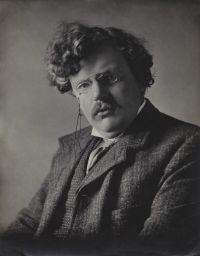
A plebiscite in Alsace had its critics, and their objection reveals what a consent counted at a single moment lacks. Gilbert Keith Chesterton warned against testing the claims to Alsace by "an official counting of heads at the moment" [21]. The danger was practical. A ruling power could make the lives of the old inhabitants intolerable, so that they would no longer remain to resist the new ones [21]. Such a principle, he concluded, would be a permanent provocation to war. A will measured only in the present can be manufactured by emptying a territory. Without the claim of those who were there before, a head count rewards whoever has moved the heads.
In Alsace, the choice of nationality finally fell not to individuals but to families, under a deadline. Matilda Betham-Edwards describes French parents of children born since the war who had to decide whether their sons would become Prussian or French citizens [22]. After the age of 16, the boy's fate was no longer in their hands: he had to put on a uniform odious to French eyes [22]. Here consent and descent are one and the same act. The parents choose, the sons inherit the choice, and the departures continued in an exodus she judged far from finished [22].
Adopted ancestors and the civic life of descent
Among anthropologists and essayists, the case for blood as the ground of nationality fell apart. Sir Arthur Keith held that, in the strict sense in which anthropologists use the word, there is no racial problem in Europe, only disturbances of nationality [23]. The hybrid offspring of any two European nationalities, he observed, could pass for a member of either [23]. L. Lind-af-Hageby went further. Nationality, like personality, is alive and changing, and there is no pure nationality; the British Isles, she notes, mix Romans, Angles, Saxons, Danes, Normans and Celts [24]. The conclusion is radical. If everyone is a hybrid, no lineage can draw a border.
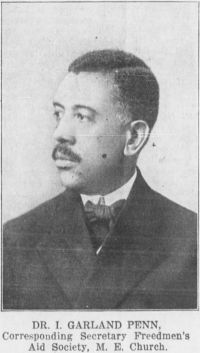
Yet descent lived on in law and sentiment. Baron Beyens, describing Germany before the war, notes a law that let a German naturalize abroad without losing his original nationality, so long as he remained "a German at heart" and obtained permission [25]. Olga Novikova, in her Russian Memories, gives this logic its starkest form: since no one can take a new father or mother at will, why a new nationality [26]? Nationality, here, is filiation. Against it stands another form of birth. Irvine Garland Penn, writing in 1891, argued that three-fourths of what he called the colored people were American born and therefore citizens; in Africa, neither complexion nor ancestry would count, and not having been born there would suffice to refuse them citizenship [27]. The soil, not the blood, makes the citizen. Fichte's own criterion, birth within a domain of speech, belongs to the same family [2].
The civic tradition did not oppose descent by abolishing ancestors. It made them adoptable. A passage of Bulwer Lytton's novel What Will He Do with It? states the principle. A man without an ancestry of his own, if himself of worth, may claim all the heroes of his fatherland, for a free citizen "has ancestors in all the glorious chiefs that have adorned the State" [7]. The sole condition is to revere their tombs and guard their memory as a son. Daniel Webster, at the Bunker Hill monument in 1825, took pride in descending from such founders, and named what made them worthy: their example of founding civil institutions on human freedom and knowledge [28]. Even where real descent is claimed, its value lies in an institution. Lineage becomes a matter of loyalty.
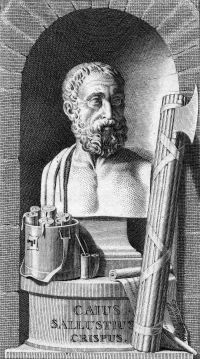
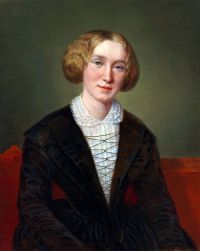
Adopted ancestry carries obligations rather than privileges. In the ancient historian Sallust's War with Jugurtha, a speaker mocks nobles who fill their speeches with eulogies of their forefathers. The glory of ancestors, he replies, is a light on their posterity that hides neither its virtues nor its faults, and he admits his own poverty in such glory [29]. George Eliot, in Daniel Deronda, published in 1876, gives the idea a modern turn. A speaker in her novel defines the divine principle of his race as "action, choice, resolved memory" [30]. Even a discourse of race, here, places its principle in a decision. That is precisely what the later typology says ethnic belonging cannot be: something gained by human effort [3].
The contrast between a nation of blood or tongue and a nation of consent describes two emphases, not two worlds. Fichte's community of German speech rested on a language he doubted parents alone could keep alive without political independence, and on a love of fatherland its author could only presuppose [5, 13]. The author of the daily plebiscite also held that no one serves a country by calumniating those who founded it [4]. In annexed Alsace, a population largely German by race and language looked to France, which stood for democracy to the descendants of its revolutionary heroes, while a mere head count threatened to reward whoever emptied the land [17, 19, 21]. And the anthropologists who dismissed race as a ground of nationality did not stop lineage from living on in law and sentiment [23, 26].
The real dividing line ran elsewhere: not between those who invoke ancestors and those who do not, but between ancestors one is born to and ancestors one may adopt. A definition of belonging by descent therefore restores no forgotten truth. It closes a door the civic idea had opened, turning a memory that can be learned into a pedigree that cannot [7, 3]. The nation of will never asked its members to forget their dead. It asked them to accept that the dead may belong to anyone willing to honor them.