AI-generated from sources
The Silent Page and the Glib Tongue, Plato's Objection to Writing and the Counterfeits of Speech
In Brief
- Plato, who compared writing to a painting that cannot answer a question or defend itself, was right on one point: a page alone never proves who did the thinking behind it.
- Speech has forgeries of its own: fluency and effect can pass for knowledge, and the rhetoric Plato attacked was later pursued in schools through speaking and writing alike.
- Oral examination tests nerve as well as knowledge: a hurried viva rewards composure, and abusive cross-examination can frighten honest people away from the witness box.
- Favoritism could decide who was even allowed before the examining boards and weigh on the examiners themselves; 19th-century reformers of public employment wanted competition thrown open to all.
Main authors


A text cannot be cross-questioned. This is the oldest objection to writing, and Plato gave it its lasting form. In the Phaedrus, Socrates likens writing to painting: it is "silent ever," and unlike speech it cannot be adapted to the person in front of it [1]. Ask a written page what it means and it gives the same words to every reader. Attack it, and no parent is there to defend it [2]. Behind the image lies a question that every school, court and examining board has had to answer in its own way. When words are set before us, how do we know who did the thinking behind them?
The obvious remedy is to bring the author into the room and make him speak. Yet the tradition that condemned the silent page also recorded the vices of the speaking tongue. It knew the orator who talks of everything, however little he knows [3], the candidate unsettled by a hurried oral [4], the honest witness frightened by cross-examination [5]. Plato's objection is sound as far as it goes. What it does not show is that the living voice is a better witness. Speech has its own forgeries, fluency and assurance, as the examination has its cram. Moving the test from page to voice changes where the question of authorship is asked. It does not answer it.
Phaedrus and the Painting That Cannot Reply
The objection grows out of a scene in which a reader falls for a text. Phaedrus arrives under the spell of a written speech by Lysias, a paradox arguing that a non-lover should be preferred to a lover. He wants Socrates to agree that nothing was or ever could be written better [6]. What has won him over, the dialogue's English commentary notes, is the beauty of the periods, not the soundness of a case it calls foolish [6]. The scene states the problem in miniature. A written piece can be admired for its finish while the reasoning behind it stays out of reach. Its reader can receive it, but cannot question the man who made it.
Against this inert object Plato sets a word that can answer for itself. Socrates describes an intelligent word "graven in the soul of the learner," able to defend itself and knowing when to speak and when to be silent. Phaedrus draws the conclusion that the written word is properly no more than its image [7]. The test is not sound but responsiveness. In the passage of the Phaedrus quoted by T. W. Allies, dialectic takes hold of a fitting soul and sows in it words that can help both themselves and their planter, growing up in a succession of minds [8]. Knowledge, on this model, proves itself by meeting objections. Writing fails because it cannot meet any.
Read closely, the Phaedrus does not draw its line only where the proverb puts it. It holds that the written word necessarily contains much that is not serious, but it also denies great value to poetry and prose alike, "spoken or written," when they are recited only to be believed, like the compositions of the rhapsodes, and not with a view to criticism or instruction [9]. The rhapsode is a performer, not a scribe. What disqualifies him is that his words ask for assent, not examination. A further division runs between discourse that submits to questioning and discourse that merely wants to be accepted. Centuries later, the author of a colloquial Greek primer flattened the distinction into a contest of organs: for John Stuart Blackie in 1891, books had defrauded the ear and the tongue by handing their functions to the eyes [10]. That reading keeps Plato's suspicion of books and loses his suspicion of recitation.
There is a further irony. The case against writing survives only because it was written down, and in works that the commentary on the Republic calls poems and dramas, by a man hostile to the poets [11]. The dialogue imitates the living exchange it praises. T. W. Lumb named the weakness of that imitation bluntly: the form makes it easy to invent questions to which the answer the author wants is the only one possible [12]. A written conversation is one in which the author plays both parts. It shows that writing can mimic the answering voice. It does not show that the mimicry tests anything.
Gorgias, or the Fluent Counterfeit
If the weakness of writing is silence, the weakness of speech is fluency. The rhetoric Plato rejected, as one popular universal history describes it, was practised by a man who talked of everything, however little he knew, and who aimed at effect and nothing else [3]. Plato repudiated it because it was no genuine knowledge. The same history observes that schools still pursued this art through speaking and writing in the mother tongue, as they once had in Latin [3]. The counterfeit, then, belongs to no single medium. It is the habit of producing the look of knowledge, and the voice produces that look at least as easily as the pen.
Plato's sharpest example is a man who could talk but could not define. Gorgias, in the commentary's account of the dialogue that bears his name, has taught rhetoric all his life and still cannot say what his art is. Pressed, he will not separate rhetoric from justice, and Socrates catches him in a contradiction [13]. Here oral examination works exactly as Plato hoped. The fluent speaker is undone not by an audience but by a questioner who will not let a phrase stand in for a thought. Many centuries later, Walter Pater summed up the charge against such teachers as one of "superficial aptitude," a skill in handling a subject that never reaches the intellectual ground of things [14].
The rhetoricians had a reply, and Plato let them make it. In the Phaedrus, Socrates voices the argument a skilful rhetorician would offer: in courts of law men care nothing about truth, only about conviction, and conviction rests on probability [15]. The argument is staged in order to be refuted, not endorsed. As a description of what persuasion rewards, though, it is hard to wave away. A tribunal that listens weighs the speaker's command of the probable, and the glib possess that command in abundance. A modern commentary on the dialogue locates the deeper error in the confusion of preliminary knowledge with creative power. No mastery of the rules, it insists, will give a speaker genius [16].
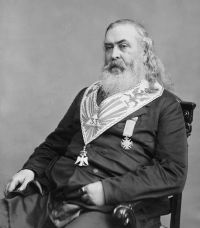
The fear followed speech wherever it became a public instrument. Albert Pike, in a manual of Scottish Rite Freemasonry, held that speech is grossly abused in republics. There, he wrote, thought is hidden in words, and the glitter of "intellectual soap-and-water bubbles" is mistaken for genius [17]. His complaint turns Plato's image of writing inside out. The page hides its author by saying too little, the orator by saying too much. Both forms of concealment have the same effect. They put a surface where the examiner hoped to find a mind.
The Crammer, the Viva and the Witness Box
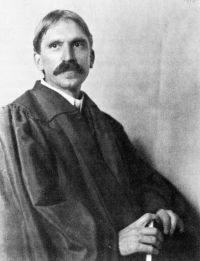
The examination system bred a counterfeit of its own. A contributor to Popular Science Monthly in 1889 described how examiners, whose business was to test rather than teach, made examination papers the real subject of study. The student sought "an insight into the mind of his examiner, not that of his teacher," and a new class of specialists arose, the crammers [18]. The script handed in at the end proves that someone could produce the answers. It cannot show where the thinking came from, because the thinking was shaped in advance to fit the paper. John Dewey, in 1916, judged most objectionable the readiness of book or teacher to supply ready-made solutions, instead of material the student must adapt for himself [19]. His warning covered what is got from reading and from listening alike.
Reformers tried to design cram out of the system, and the system kept swallowing the design. Macaulay's commission on the Indian Civil Service, as A. Lawrence Lowell recounts, fitted the examinations to the studies of the English universities. The aim was that ambitious young men should not waste time on special study that would be useless if they failed [20]. Yet in 1925 Tripurari Chakravarti mocked an official, marked in his eyes by the usual bureaucratic mentality, who treated success in that examination as the measure of university education in India [21]. Arlo Bates had stated the principle that both sides were circling. Tests are necessary, but to study for them directly is fatal to all the higher uses of study [22].
The natural cure was to question the candidate aloud, and the same magazine explained why it so rarely happened. Few examiners still cared to decide by viva voce. It was done in a hurry, under disturbing conditions, with no time for a fresh paper or for quiet verbal questions. Nor could the candidate be brought into a state "perfectly composed, easy, and master of himself" [4]. The complaint is revealing. The oral was valued for exactly what Plato valued, adaptation to the individual, and it failed for want of the leisure that adaptation needs. Hurried, it measured composure along with knowledge.
The courts knew the other side of the coin. In a convocation address to graduates of the universities of Bombay and Madras in 1892, W. Hughes-Hallet warned that the abuse of cross-examination made its very name a terror and left honest folk afraid to enter the witness box [5]. Spoken interrogation is the hardest test a speaker can face. For that very reason it can be turned against the truthful. An examination by voice does not isolate the thinker. It adds a second variable, nerve, and the second can swamp the first.
Open Competition and the Forger's Ceiling
Plato praised speech because it can be adapted to individuals. The reformers of public employment had good reason to fear personal influence. In one of his presidential messages, Rutherford B. Hayes observed that examinations had not always been open to worthy persons. Favoritism and partisan influence decided who might appear before the boards, and even the examiners were pressed by the candidates' friends [23]. The Northcote–Trevelyan report of 1854 proposed throwing the competition entirely open to all persons of a given age [24].
The standing objection was that an impersonal test cannot reach character. In 1903 Carl Schurz granted that the detractors of the merit system had made the claim with some plausibility. He replied that experience showed official dishonesty to be infinitesimally rare among those admitted by competition, compared with those placed by political favoritism [25]. Half a century earlier, the 1854 report had not trusted the examination alone. Candidates were to supply references from persons able to speak to their moral conduct [24]. The impersonal test kept a personal voucher attached to it. A performance on a given day, the reformers seem to have sensed, could not answer for the whole person.
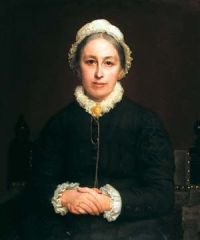
Silencing the candidate's personal advocates did not remove the question of authority. It moved it to the examiners. Emily Davies, writing in 1868 on examinations for women, conceded that a test set by men of high repute, or by a university, carries more weight. She still asked whether an unknown standard, devised expressly for candidates drawn from a limited and notoriously illiterate class, could be worth much as regards authority [26]. Émile Faguet drew the cynical conclusion: examination is "ostracism of the inefficient," and in practice co-optation, since officials admit only those whom other officials approve [27]. A test answers for its candidate only as far as someone answers for the test.
The written text, for its part, is less mute than the Phaedrus claims. The commentary on the Laws, weighing the genuineness of writings, states a principle of attribution: the great writer may fall below his best, but the forger or imitator "cannot rise much above himself" [28]. Excellence, it holds, is "a strong proof" of genuineness. The same passage warns that giving the best parts to the master and the worst to an interpolator requires express evidence or comparison with other writings. Emerson came at the question in 1875 from another direction, and with a reservation: it never troubles the simple seeker, he wrote, from whom he derived a sentiment. Yet it is as difficult to appropriate the thoughts of others as it is to invent, he held, and the purpose of display is what exposes the fraud [29]. Borrowed thinking gives itself away by its level or its display, not its medium, provided someone reads closely enough to notice.
Plato's charge against writing holds: a page cannot be asked what it meant, cannot adjust to its reader and cannot defend itself when attacked [1, 2]. But the voice that can do all of this has its own counterfeits. The orator who speaks on every subject aims at effect rather than knowledge [3]. The hurried oral examination rewards composure [4], and hostile cross-examination frightens honest witnesses [5]. Favoritism can decide who goes before the examiners, and press the examiners themselves [23]. The examination system, for its part, breeds cram, the answer built in advance to fit the examiner's mind [18]. Neither medium certifies who did the thinking.
What this long quarrel between page and voice shows is that authorship is tested by questioning, not by the channel. Plato's own line ran not only between page and voice but between words offered to be believed and words offered for criticism, whether spoken or written [9]. A written work can be questioned by a reader who compares and weighs, and who notices when its level falls short of its supposed author [28]. A spoken one can be performed by someone who has only learned the moves, as Gorgias could teach an art he could not define [13]. An oral defence does not settle who thought. It moves the question into a room where time, nerve and favor join the evidence. Neither page nor voice can vouch for a mind; only patient questioning can.