Phaedrus

Definition and stakes

Forrest Reid,  The Garden God: A Tale of Two Boys

“ Apollo, Dionysus:—strong, beautiful, swift. This boy!—what had he to do with them? Why should he suggest them? And then, in the background, a haunting sense of something darker, more fateful—tragic even!—again the legend of Dionysus; but more pitiable, quite human, vaguely pathetic and bewildering.
By and by he opened a copy of the Phaedrus, which he had worked through with his father, and began to read.
They had studied together most of the shorter dialogues, and the whole of the Republic, but the Phaedrus Graham cared for most.
”
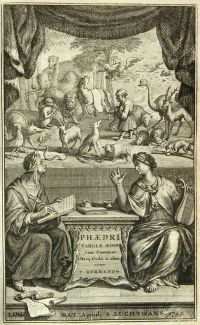
Source: Gutenberg

Anne C. Lynch Botta,  Handbook of Universal Literature…

“ The style of Phaedrus is pure and classical, and combines the simple neatness and graceful elegance of the golden age with the vigor and terseness of the silver one. He has the facility of Ovid and the brevity of Tacitus. In the construction of his fables, he displays observation and ingenuity; but he is deficient in imagination. He makes his animals the vehicles of his wisdom, but he does not throw himself into them, or identify himself with them; while they look and act like animals, they talk like human beings. In this consists the great superiority of Aesop to his Roman imitator ”
Source: Gutenberg

Portrait of Phaedrus Phaedrus,  The Fables of Phædrus

“ Pliny tells us that the “hydrus” lives in the water, and is exceedingly venomous. Some Commentators think that Phædrus, like Æsop, intends to conceal a political meaning under this Fable, and that by the Water-Snake he means Caligula, and by the Log, Tiberius. Others, perhaps with more probability, think that the cruelty of Tiberius alone is alluded to in the mention of the snake. Indeed, it is doubtful whether Phædrus survived to the time of Caligula: and it is more generally believed that the First and Second Books were written in the time of Augustus and Tiberius. ”
Source: Gutenberg

Get perspective with Kwize: daily news enlightened by great literature