“ A Symposium which takes the nature of a Working Group depends for its utility especially upon effective commentary and critical analysis, and we commend all the participants for their contributions in this regard. ”
Symposium
Definition and stakes
A symposium is a structured gathering for intellectual or social discussion, often featuring presentations and debates. Plato’s Symposium explores love’s transcendence through philosophical conversation, while the Chautauqua Institution’s records emphasize organized assemblies focused on collaborative learning and structured participation.
Henry Martyn Robert’s procedural guidelines highlight the symposium’s role in deliberative bodies, contrasting with Joseph Sheridan Le Fanu’s vivid portrayal of informal, lively interactions. These diverse approaches reveal the symposium as both a venue for rigorous analysis and a vibrant space for shared exploration, bridging academic scholarship and community engagement.
Quotes about “symposium”
 Plato,
The Dialogues of Plato
(1892)
Plato,
The Dialogues of Plato
(1892)
“ The expression ' poema magis putandum quam comicorum poetarum,' which has been applied to all the writings of Plato, is especially applicable to the Symposium. The power of love is represented in the Symposium as running through all nature and all being : at one end descending to animals and plants, and attaining to the highest vision of truth at the other. ”
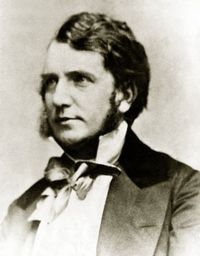 Joseph Sheridan Le Fanu,
Wylder's Hand
Joseph Sheridan Le Fanu,
Wylder's Hand
“ Of course, when great guns are present, and people talk pro bono publico, one at a time, with parliamentary regularity, things are different; but at an ordinary symposium, when the garrulous and diffident make merry together, and people break into twos or threes and talk across the table, or into their neighbours' ears, and all together, the noise is not only exhilarating and peculiar, but sometimes perfectly unaccountable. ”
Plato,
Symposium — Translator's Introduction
“ If it be true that there are more things in the Symposium of Plato than any commentator has dreamed of, it is also true that many things have been imagined which are not really to be found there. Some writings hardly admit of a more distinct interpretation than a musical composition ”
 Harold Frederic,
The Lawton Girl
Harold Frederic,
The Lawton Girl
“ All that we need at first is the skeleton of an organization, the most important feature of which would be the committee on membership. Much depends upon getting the right kind of men interested in the matter. Let the objects and work of this organization unfold and develop naturally and by degrees. It may take the form of a mechanics’ institute, a library, a gymnasium, a system of coffee-taverns, a lecture course With elevating popular exhibitions; and so I might go on, enumerating all the admirable things which similar bodies have inaugurated in other villages, both here and in Europe. ”
Chautauqua Institution, The Chautauquan, Vol. 04, January 1884
“ Thirdly, we have a selection read before the body, which is followed in turn by an essay. Lastly, about twenty minutes is devoted to a general exercise, during which time any member may occupy the floor in delivering a short talk appropriate to the lesson, or may call upon some one else to do so. All of our members seem enthusiastic, and we think that much good will be done. We appoint a critic at each meeting to note the performances and pass criticisms thereon. We have a complete organization, with a constitution, by-laws, and a full set of officers. ”
Amos R. Wells, Sunday-School Success
“ Programmes for these conferences should be arranged with as much care as for the main convention, and nothing should be done at random. It is a good plan, at the opening of these little simultaneous gatherings, to appoint one member of each to take notes of the best things and report them succinctly to the entire body when it reassembles. ”
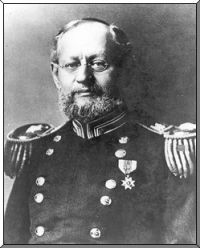 Henry Martyn Robert,
Robert's Parliamentary Practice
(1921)
Henry Martyn Robert,
Robert's Parliamentary Practice
(1921)
“ Business in Meetings Designed for Other Purposes. In many societies there is practically no business transacted except at the annual meeting when the reports for the year are received and acted upon, officers are elected, and committees appointed, etc. Other societies find it convenient also to have regular business meetings quarterly, or even monthly, these meetings frequently being in connection with, and at the close of, the regular literary, musical, scientific, social, or religious meeting. These business meetings are under the rules of deliberative assemblies. ”
Chautauqua Institution, The Chautauquan, Vol. 05, December 1884…
“ The local circle keeps warm and vigorous through the year the spirit of the summer assemblies. Indeed, to the local circles we believe we are indebted for much of the enthusiasm of the summer meetings. Their students garner rich harvests of thought and feeling in the long months of study, and the assemblies are but the meeting places to compare work, rest weary brains, gather fresh zeal and plan new undertakings. They are becoming necessary elements in the work. Students are feeling we must have an assembly. ”
Chautauqua Institution, The Chautauquan, Vol. 04, March 1884…
“ Our circle now is full half a hundred strong, and the meetings which are held at private residences every alternate Tuesday evening are truly enjoyable. The mode of conducting them is very much like that of other circles, and needs no detailed description. Beside the work laid out in The Chautauquan a committee is appointed four weeks prior to each meeting to provide a program of exercises, and as there is a good natured strife as to who shall excel in the attractiveness and excellence of the program furnished, the meetings never lack interest. ”
Henry Martyn Robert,
Robert's Parliamentary Practice
(1921)
“ Socialized Classes. In teaching English, Geography, Civics, History, etc., where the "Socialized Recitation" is employed, a very good foundation may be laid for the future study of parliamentary law. The offices of chairman and secretary are filled each day by a different member of the class. Committees are appointed for investigation, and make their reports. The chairman, at the beginning of the recitation, announces the subject of the lesson and states that it is open for discussion. Members who wish to take part rise and the floor is assigned as shown in the First Drill. ”
Henry Martyn Robert,
Roberts Rules of Order Revised 4th Ed
(1915)
“ Any meeting which is not an adjournment of another meeting commences a new session. In the case of a permanent society, whose by-laws provide for regular meetings every week, month, or year, for example, each meeting constitutes a separate session of the society, which session, however, can be prolonged by adjourning to another day. ”
Various, The History Teacher's Magazine…
“ The primary purpose of the conference is the same as that of the association—‘to advance the study and teaching of history and government through discussion,’ and ‘to promote personal acquaintance among teachers and students of history.’ In these meetings a large number of teachers can be reached whose duties and location prevent them from attending conventions at a distance. Such conferences also afford opportunities for wider discussion than is possible at the meetings of the association. Free statement of opinion indicates lines of work of great worth and interest. ”
Chautauqua Institution, The Chautauquan, Vol. 03, March 1883
“ In addition to our elective officers, we have a committee on work, consisting of five members, appointed by the president, whose duty it is to arrange the work of the circle, make a sub-division of the required readings, and assign topics in advance to the several members, whose duty it is to present the same at the next stated meeting of the circle in the form of an essay, lecture, or recitation as each may deem proper. By this method each member has his or her share of work to perform, and all become interested and active working members. ”
Aidan Budd; Holger Dinkel; Manuel Corpas; Jonathan C. Fuller; Laura Rubinat; Damien P. Devos; Pierre H. Khoueiry; Konrad U. Förstner; Fotis Georgatos; Francis Rowland; Malvika Sharan; Janos X. Binder; Tom Grace; Karyn Traphagen; Adam Gristwood; Natasha T. Wood, Ten Simple Rules for Organizing an Unconference…
“ Unlike traditional conferences, an unconference is a participant-oriented meeting where the attendees decide on the agenda, discussion topics, workshops, and, often, even the time and venues. The informal and flexible program allows participants to suggest topics of their own interest and choose sessions accordingly. The format provides an excellent opportunity for researchers from diverse disciplines to work collaboratively on topics of common interest. ”
Chautauqua Institution, The Chautauquan, Vol. 03, January 1883
“ At each meeting, after the program of the previous meeting has been carried out, the leader requests one or two members to prepare essays on a certain part of the work, one or two members to bring a stated number of questions on a certain subject, another member to read a short article from The Chautauquan. Very often the leader asks for the opinion of various members of a character or an article met with in the reading. At our last meeting the circle authorized the secretary to appoint at each meeting—which occurs each alternate week—a critic, also what might be called an orthoëpist. ”
Jennifer L. Martin, Ten Simple Rules to Achieve Conference Speaker Gender Balance…
“ Finally, conferences and symposia are great ways of generating new collaborations, new ideas, and new directions in science. If we keep inviting the same people, and the same types of people, over and over again, we limit the diversity of thought and, potentially, the opportunities for innovation.So, here are ten simple rules to achieve conference speaker gender balance. ”
| portal, The Borzoi 1920 (1920)
“ Much the best committees from the point of view of material are committees about business which meet at business premises—shipping offices, for choice. One of the Pacific Lines has the best white blotting-paper I know; and the pencils there are a dream. I am sure the directors of that firm are Drawers; for they always give you two pencils, one hard for doing noses, and one soft for doing hair. When you have selected your committee and the Fig. 1 speeches are well away, the Drawing begins. Much the best thing to draw is a man. ”
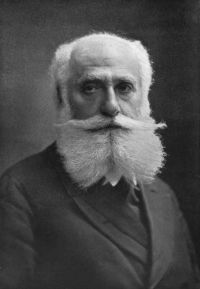 Max Simon Nordau,
Conventional Lies of our Civilization
(1886)
Max Simon Nordau,
Conventional Lies of our Civilization
(1886)
“ Thus the public meeting is arranged and a committee formed to take charge of it. Each committee of this kind is composed of two elements, the energetic and the unscrupulous schemers who are working for some personal advantage of a moral or material nature, and the consequential narrow-minded blockheads, solemnly in earnest, who are taken on board by the former for ballast. Others can become members of the committee if they choose, even if they are not invited to join. All that is necessary is to speak loudly and fervently in the meeting and thus attract the attention of the crowd. ”
Henry M. Robert, Pocket Manual of Rules of Order for Deliberative Assemblies (1876)
“ Any society is competent to decide what shall constitute one of its sessions, but, where there is no rule on the subject, the common parliamentary law would make each of its regular or special meetings a separate session, as they are regarded in this Manual. The disadvantages of a rule making a session include all the meetings of an ordinary society, held during a long time, as one year, are very great. ”
American-Irish Historical Society, The journal of the American-Irish Historical Society…
“ We provide for an annual meeting to be held in the month of January in each year, the day and place to be determined by the Society in general meeting, or by the Executive Council in case the Society fails to do so. Special meetings of the Society may be called at any time by the Executive Council. A quorum for the transaction of business at all meetings of the Society is fixed at thirty-five, instead of ten, as at present. ”
 Thomas Jefferson,
The Writings of Thomas Jefferson…
Thomas Jefferson,
The Writings of Thomas Jefferson…
“ A conference has been asked after the first reading of a bill.—1 Grey, 194. This is a singular instance. During the time of a conference, the House can do no business. As soon as the names of the managers are called over, and they are gone to the conference, the Speaker leaves the chair, without any question, and resumes it in the return of the managers. It is the same while the managers of an impeachment are at the House of Lords.—4 Hats. ”
Chautauqua Institution, The Chautauquan, Vol. 03, February 1883
“ From the papers, questions, and answers, arise profitable discussions, if time permits. A committee on entertainment, appointed annually, supervise all lectures, concerts, social entertainments, etc., which—if practicable—are arranged for once in three months. We number twenty-four active members. Eight other names are upon our roll, of whom three are irregular. We launch out this (the third) year with much enthusiasm and general interest, hoping to far exceed in profit to ourselves and in influence in favor of our grand Chautauqua work either of the preceding years. ”
 A. Frederick Collins,
Inventing for Boys
A. Frederick Collins,
Inventing for Boys
“ In every business however small or large there should be frequent conferences of the partners, or of [167] the heads of departments, and to save time and to conserve energy it is better that these meetings should be held at certain times each week, or oftener, when all of the matters of the office and shop can be discussed freely and threshed out. Indeed it is the common practice of every business concern where there are a number of departments for the heads of them to get together every day in conference to learn the viewpoints of the others. ”
Chautauqua Institution, The Chautauquan, Vol. 03, March 1883
“ We have twelve regular members, all ladies. The president opens the meeting by reading a chapter from the Bible, then the secretary reports, after which the program for the evening is taken up. The reading for the next week is assigned by the president, and our aim at each meeting is to review the reading of the past week. This is done by papers relating to the reading, or a synopsis of the readings. Questions are assigned and answered, and we spend considerable time in discussion. Our meetings are always informal, and are conducted in the conversational style. ”
Alice S. Cheyney, A definition of social work: A thesis in sociology (1923)
“ The conference is divided into ten sections: Children. Delinquents. Health. Public agencies and institutions. The family. Industrial and economic problems. The local community. Mental hygiene. Organization of social forces. Uniting of native and foreign-born. At the annual convention each of these ten sections holds its own group meetings at which papers are presented and discussions conducted on the subjects appropriate to the section. It will be seen that the division into sections is on a basis of administrative fields rather than technique or function. ”
“ He created the animals; he is the inventor of the arts; all the gods are his subjects; he is the fairest and best himself, and the cause of what is fairest and best in others; he makes men to be of one mind at a banquet, filling them with affection and emptying them of disaffection; the pilot, helper, defender, saviour of men, in whose footsteps let every man follow, chanting a strain of love. Such is the discourse, half playful, half serious, which I dedicate to the god. ”
Henry Martyn Robert,
Robert's Parliamentary Practice
(1921)
“ In meetings consisting of a half dozen or more people, it has been found advisable to have, in addition to a chairman and a secretary, more rules and more formality than in a meeting of three or four persons. ”
John Rae, Contemporary Socialism
“ When the question is somewhat of a burning one, and the meeting begins to grow warm, all speak at once, and none listen. On these occasions the assembly breaks up into groups, each of which discusses the subject on its own account. ”
Thomas Woody, Early Quaker education in Pennsylvania (1920)
“ This brief presentation of the organization and direction on the part of the meetings should be sufficient to point out: (1) that the general nature of the organization is a hierarchy of units; (2) that the direction of school activities comes from the higher to the lower, and is of a general and suggestive rather than specific and mandatory nature; (3) that the monthly meeting formed the real working unit, and that on its diligence probably depended the [176] welfare of the preparatives’ schools. ”
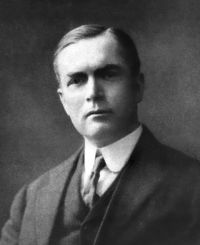 John Raleigh Mott,
The Outlook in the Moslem World
John Raleigh Mott,
The Outlook in the Moslem World
“ Accessibility and Occupation, Evangelization, the Christian Church, Christian Education, Christian Leadership, Christian Literature, Women's Work, Medical and Social Needs, Co-operation and Spiritual Dynamic. Each Committee of Findings based its work on surveys and papers prepared and circulated in advance, on the findings of the various Regional Conferences, on the discussions of the General Conference, and upon the constructive, corporate thinking of the committee itself. ”
“ Thereafter the league resolved itself into a committee of ways and means. The President of the Board of Trade was coming to support Sir James’ candidature at a meeting the date of which was already fixed for a fortnight hence, and it was decided to make a demonstration in force. And as the discussion went on, and real practical plans were made, that strange fascination and excitement at the thought of shouting and interrupting at a public meeting, of becoming for the first time of some consequence, began to seethe and ferment. ”
Henry Woodcock, The Hero of the Humber; Or, The History of the Late Mr…
“ Grace having been chanted and justice done to the sumptuous tea, the public meeting began. Mr. John Symons occupied the chair, and he was surrounded on the platform by a large number of ministers, gentlemen, merchants, mechanics, and working men.CHAIRMAN'S ADDRESS.The Chairman said:—It was a common custom of persons not novices situated similarly to himself, to preface their remarks by saying that some person of higher local distinction ought to occupy the honourable position as chairman, and that was his request to the committee. ”
