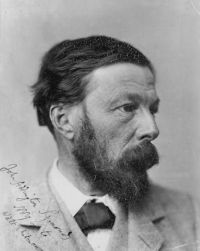
John Addington Symonds

John Addington Symonds

Summary

Portrait of John Addington Symonds John Addington Symonds,  A Problem in Greek Ethics

“ The beloved, too, when he is seen in any disgraceful situation, has the same feeling about his lover. And if there were only some way of contriving that a state or an army should be made up of lovers and their loves, they would be the very best governors of their own city, abstaining from all dishonour; and emulating one another in honour; and when fighting at one another's side, although a mere handful, they would overcome the world. For what lover would not choose rather to be seen by all mankind than by his beloved, either when abandoning his post, or throwing away his arms? ”
Source: Gutenberg

Portrait of John Addington Symonds John Addington Symonds,  A Problem in Greek Ethics (1908)

“ Yet no one shared in fuller measure the Greek admiration for health and grace and vigour of limb. This is obvious in the many radiant pictures of masculine perfection he has drawn, as well as in the images by which he loves to bring the beauty-bloom of youth to mind. The true Hellenic spirit may be better studied in Pindar than in any other poet of his age; and after we have weighed his high morality, sound counsel, and reverence for all things good, together with the passion he avows, we shall have done something toward comprehending the inner nature of Greek love. ”
Source: Wikisource

Portrait of John Addington Symonds John Addington Symonds,  A Problem in Greek Ethics

“ Greek love was, in its origin and essence, military. Fire and valour, rather than tenderness or tears, were the external outcome of this passion; nor had Malachia, effeminacy, a place in its vocabulary. At the same time it was exceedingly absorbing. "Half my life," says the lover, "lives in thine image, and the rest is lost. When thou art kind, I spend the day like a god; when thy face is turned aside, it is very dark with me." [12] Plato, in his celebrated description of a lover's soul, writes: [13] —
"Wherever she thinks that she will behold the beautiful one, thither in her desire she runs.
”
Source: Gutenberg

Get perspective with Kwize: daily news enlightened by great literature