AI-generated from sources
The Soul of the Suburb, Forging Urban Identity Through History and Celebration
In Brief
- Urban localities are more than physical spaces; they are moral organizations shaped by their inhabitants' sentiments and traditions.
- A shared history, embodied in landmarks and collective memories, fosters deep community bonds and local pride, often driving resistance against external threats.
- Public celebrations and organized community efforts are crucial for performing and reinforcing collective urban identity, transforming mere spaces into meaningful places.
- Despite modern homogenizing forces, the human impulse for connection and belonging persists, making local identity vital for a city's future vitality.
Main authors



A city is more than a physical entity or a geographical expression; it is a moral organization rooted in the customs and sentiments of its inhabitants [9]. While modern metropolitan areas can often feel impersonal, losing the distinct individuality that once characterized cities from Renaissance Italy to ancient Mesopotamia, they remain collections of unique localities, each possessing its own soul and meaning [5, 8]. This character is not always obvious. A place like Notting Hill, which may seem commonplace to an outsider, can hold a profound and poetic significance for its residents, its pillar-boxes and evening light capable of evoking emotions stronger than joy or sorrow [2]. This deeply personal connection transforms a mere neighborhood into a repository of sentiments and traditions, a landscape stained with the particular character of its population [7].
The identity of a locality is often defined by its physical and historical texture, creating a stark contrast with surrounding, more prosaic districts [1]. This distinction fosters an intensified self-consciousness and pride among residents, who see their collective achievements reflected in the built environment . An old tavern, for example, can transcend its function to become a revered shrine, a living memorial connecting the community to a storied past and its celebrated figures [4]. History itself acts as a kind of collective memory, with shared ancestors and pivotal events forging a powerful sense of identity and maintaining communal standards [6]. It is this inherited culture, embodied in crooked streets and antique simplicity, that gives a place its unique character and provides a foundation for collective self-definition within the vastness of the urban fabric [14].
A Geography of Sentiments
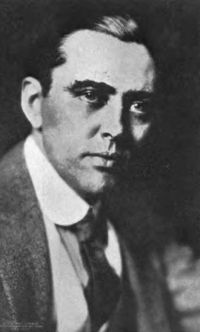
The process by which a geographical space becomes a meaningful place is central to understanding urban life. Over time, as Robert Ezra Park observed in 1915, every quarter of a city acquires the qualities of its inhabitants, evolving from a simple location into a neighborhood with its own history and traditions . This transformation reveals that the city's visible structure is an expression of human nature, a physical manifestation of a moral order shaped by the people who live there . The result is a mosaic of distinct localities, each imbued with a unique spirit that reflects the lives and habits of its population.
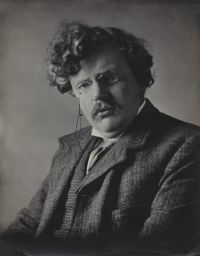
This spirit of place is often perceived through a deeply subjective and emotional lens. For some, the urban landscape—with its violet roofs and lemon lamps—is as natural and inspiring as a dramatic mountain skyline or a coastal sunset is for others [3]. G. K. Chesterton argued passionately that any locale, no matter how seemingly ordinary, can become the object of profound attachment, a 'cause' capable of inspiring loyalty and love . This perspective is not universally shared; from a more detached viewpoint, such intense local patriotism can appear foolish, and storied places like Athens and Jerusalem can be dismissed as having been nothing more than 'silly suburbs' on the grand stage of the world [10].
The identity of a neighborhood is frequently sharpened by its contrast with the surrounding environment. A locality might present itself as an island of 'antique simplicity' and suburban tranquility, bounded on all sides by the 'uninviting' and chaotic arteries of the larger city . This dynamic mirrors a historical pattern where cities were defined by their separation from the outside world, their walls enclosing a space of intense communal affinity and civic pride . In the contemporary metropolis, this sense of distinction plays out at a micro-level, allowing individual districts to cultivate and preserve a unique character against a backdrop of increasing urban homogeneity.
At the core of this local consciousness lies history and tradition, which function as the community's memory . A shared past, marked by common ancestors or collective participation in defining events, strengthens social bonds and provides a powerful sense of identity. This historical continuity can be anchored in physical landmarks, such as a venerable tavern that becomes a site of pilgrimage, connecting present-day inhabitants to a celebrated past and reinforcing the area's distinct heritage amidst constant change . It is this historical depth, this sense of a story embedded in the streets, that ultimately gives a place its soul .
Resistance, Patriotism, and the Right to the City
A strong local identity often ignites active resistance when the physical or social fabric of a community is threatened by external forces. As imagined by G. K. Chesterton, a war between London boroughs over a plan to demolish a small street for commercial development becomes a vehicle for reviving ideals of local patriotism and civic beauty [11]. This is not merely a literary device. Real-world accounts describe inhabitants taking matters into their own hands, using saws and hatchets to tear down barriers and assert a public right of way, successfully forcing developers to abandon their projects [12]. Such actions demonstrate a profound commitment to preserving the integrity of a place.
These acts of defiance are expressions of communal autonomy and political will. Throughout history, communities have mobilized to protect their shared spaces and rights, whether through indignation meetings to protest the removal of a village pump or through more radical measures during times of political upheaval, such as the burning of a duke's castle by the people of Nottingham in support of reform [19, 20]. As historian Alice Stopford Green noted regarding 15th-century town life, such controversies served as a crucial form of political education, compelling citizens to define and defend their liberties and thereby forging a 'genuine patriotism' [13].
The pressures facing local communities have evolved in the modern era. The relentless expansion of the city can engulf once distinct villages, leaving them as mere 'islands in this flood of mean brick,' their unique historical character almost entirely erased . Furthermore, modern conveniences like easy communication and transportation can paradoxically weaken neighborhood bonds by enabling individuals to live more fragmented lives, their attention distributed across several different worlds rather than being centered in one place [15]. In this context, the struggle for preservation is a fight against both physical erasure and social dissolution.
In a complex turn, social forces like segregation can sometimes reinforce community solidarity. Isolated immigrant or ethnic enclaves may develop intensified internal bonds as a response to external prejudice . This dynamic resonates with contemporary principles affirming the rights of national minorities to preserve and develop their unique cultural, linguistic, and religious identities, free from forced assimilation [16, 18]. This frames the local struggle for identity within a broader political context, distinguishing between states that encourage assimilation into a single dominant culture and those that protect pluralism, recognizing that some aspects of identity, tied to ancestry, cannot simply be learned or abandoned [17].
The Performance of Community
Public celebration is a primary stage upon which collective urban identity is performed and reinforced. Large-scale events like the Mardi Gras carnival can transform a city, temporarily handing over its keys to a 'King of the Carnival' and turning its streets into a theater of 'high revelry' [26]. Such festivities, as Julian Street observed, act as a vital hobby for the city, keeping it from becoming overly pompous or falling into a rut [21]. During these moments, the normal rules of social distance are suspended, and streets throng with strangers rejoicing together, turning the city into a 'carnival of joy' [22].
This tradition of public festivity has deep historical roots. In older times, celebrations saw city fountains flowing with wine and wealthy citizens adorning their homes with bright silks and showering the crowds below with coins, creating a spectacle of communal effervescence and revelry [23]. The modern city echoes this spirit in the lively chaos of its commercial streets, where blazing lights, open-air shops, music halls, and swarms of laughing people create a vibrant, multi-sensory experience [24]. Even simple decorations like flags and paper lanterns can temporarily remake a town, giving it the festive and colorful air of a major metropolis [25].
Beyond these grand, often chaotic celebrations, community is also forged through more organized and intentional efforts. As M. P. Follett noted in 1918, a widespread 'hunger for a wider social intercourse' often leads to spontaneous neighborhood organizing driven by shared needs, whether for recreation, local improvements, or community art forms like music and drama [29]. This impulse to create solidarity can be seen in utopian visions, like that of Émile Zola, where common houses become 'people's royal palaces' offering libraries, museums, and diversions—turning everyday life itself into a 'continual festival' [28]. These initiatives institutionalize connection and provide durable spaces for communal life.
Fostering these bonds remains a persistent challenge, particularly in an age characterized by the anonymity of massive apartment buildings and the quiet isolation of suburban neighborhoods [30]. Yet, the desire for connection endures. Civic fêtes that successfully draw out even the most reclusive citizens are seen as powerful expressions of 'honourable civic pride,' moments when a community comes together to celebrate its 'birthright' [27]. The contemporary call to build 'communities of light' by treating neighbors as friends and listening to their concerns reaffirms a fundamental truth: the foundation of a vibrant community begins with establishing personal bonds and working together to improve a shared place .
The identity of an urban locality is not a static feature of its geography but a dynamic quality forged in the crucible of shared history, collective sentiment, and communal struggle . This spirit of place manifests in the deep, personal connection an individual can feel for their immediate surroundings and in the fierce local patriotism that mobilizes to defend a neighborhood's character against the pressures of development . Within this framework, a city becomes a moral and emotional landscape where mundane structures can be elevated to the status of sacred symbols and old establishments become living shrines to a collective past . This identity is perpetually performed and contested, asserted through both direct action against unwelcome change and the joyful solidarity of public festivals .
While the homogenizing forces of modern urbanism and the atomization of social life present profound threats to the integrity of the local neighborhood, the human impulse toward community remains a powerful and persistent force . The histories of civic resistance and the ongoing efforts to organize neighborhood life reveal a deep-seated need to belong to, and collectively shape, a specific place . The future vitality of our cities may therefore depend not on grand, top-down designs, but on nurturing the unique character of their many constituent parts. The challenge lies in recognizing that within these seemingly ordinary localities resides the potential for the kind of rich civic life that transforms a mere residential area into a true human community .