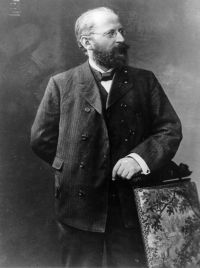
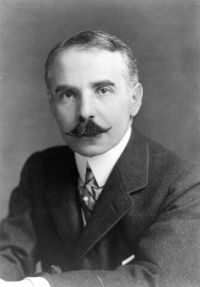
Frederick L. Lipman

Biographical details

Frederick L. Lipman Creating Capital

From England, and from American towns here and there, we hear stories of the wage-earner on whom increasing income has had the effect of lessening the effort to work; who stops during the week when the higher wage scale has paid him the amount he is accustomed to regard as a week's earnings. Now, would it not seem natural to expect that any man encountering improved market conditions for his output, whether of commodity or service, would seek to turn the situation to advantage by increasing that output as largely as lay in his power?
Source: Gutenberg

Frederick L. Lipman Creating Capital

If I have in mind some new invention that will perhaps confer benefits on mankind, the best test of its practicability and utility will be, Will it pay, will people buy it, pay money for it? If an improvement in process is proposed, the question is, Will it pay? If the young man starts out in life with high ideals and a reasonably good opinion of his own abilities, an opinion fostered perhaps by fond parents and admiring friends, the question is, Will these abilities fit in with the world's needs?
Source: Gutenberg

Frederick L. Lipman Creating Capital

Money-making as an aim thus becomes subsidiary to the characteristic activities of the enterprise, it is in a sense a by-product. But the money-making aim is there, although perhaps in the background. It is furnishing the power under which the enterprise operates. More than that, it is the gauge indicating the prosperity or lack of prosperity of the enterprise, its progress, its fitting in with the needs of life. In short, the money-making aim spurs on the business enterprise, just as the weekly or monthly pay spurs on the humble worker
Source: Gutenberg

Get perspective with Kwize: daily news enlightened by great literature