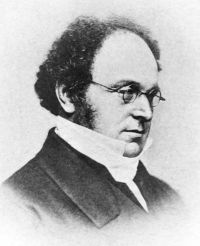
George Rusby Kaye

Biographical details

George Rusby Kaye,  Indian Mathematics — Appendices… (1915)

“ Tell me quickly, mathematician, two numbers such that the cube-root of half the sum of their product and the smaller number, and the square-root of the sum of their squares, and those extracted from the sum and difference increased by two, and that extracted from the difference of their squares added to eight, being all five added together may yield a square-root—excepting, however, six and eight? ”
Source: Wikisource

George Rusby Kaye,  Indian Mathematics — The Sulvasūtras (1915)

“ It is a remarkable fact that the second and third of our periods have no connection whatever with the first or S'ulvasūtra period. The later Indian mathematicians completely ignored the mathematical contents of the S'ulvasūtras. They not only never refer to them but do not even utilise the results given therein. We can go even further and state that no Indian writer earlier than the nineteenth century is known to have referred to the S'ulvasūtras as containing anything of mathematical value. ”
Source: Wikisource

George Rusby Kaye,  Indian Mathematics — Circ. A.D. 600–1200 (1915)

“ The Indian methods for the solution of may be summarised as follows:
If and then will where r is any suitable integer.
Also where n is any assumed number.
The complete integral solution is given by a combination (a) and (b) of which the former only is given by Brahmagupta, while both are given by Bhāskara (five centuries later) . The latter designates (a) the 'method by composition' and (b) the 'cyclic method.' These solutions are alone sufficient to give to the Indian works an important place in the history of mathematics.
”
Source: Wikisource

Get perspective with Kwize: daily news enlightened by great literature