Diophantus

Definition and stakes

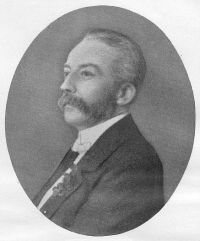
Portrait of Florian Cajori Florian Cajori A History of Mathematics (1893)

In the solution of simultaneous equations Diophantus adroitly managed with only one symbol for the unknown quantities and arrived at answers, most commonly, by the method of tentative assumption, which consists in assigning to some of the unknown quantities preliminary values, that satisfy only one or two of the conditions. These values lead to expressions palpably wrong, but which generally suggest some stratagem by which values can be secured satisfying all the conditions of the problem.
Source: Wikisource

James Wood The Nuttall Encyclopædia — D

Diophantus, a Greek mathematician, born in Alexandria; lived presumably about the 4th century; left works in which algebraic methods are employed, and is therefore credited with being the inventor of algebra.
Dioscor`ides, a Greek physician, born in Cilicia, lived in the 1st century; left a treatise in 5 books on materia medica, a work of great research, and long the standard authority on the subject.
Dioscuri, twin sons of Zeus, Castor and Pollux, a stalwart pair of youths, of the Doric stock, great the former as a horse-breaker and the latter as a boxer
Source: Wikisource

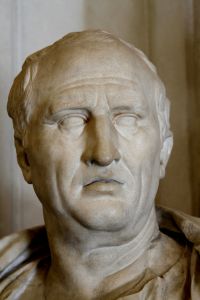
Portrait of Plutarch Plutarch Plutarch's Lives, Volume 2 (of 4…

After Themistokles went into exile the common people grew insolent and produced a numerous brood of informers, who constantly assailed the noblest and most powerful citizens through envy of their prosperity and influence. One of these men, Diophantus of Amphitrope by name, obtained a verdict against Aristeides on a charge of receiving bribes. It was stated that when he was regulating the assessment of the Ionians he received money from them to tax them more lightly. As he was unable to pay the fine of fifty minæ, which the court laid upon him, he left Athens and died somewhere in Ionia.
Source: Gutenberg

Get perspective with Kwize: daily news enlightened by great literature