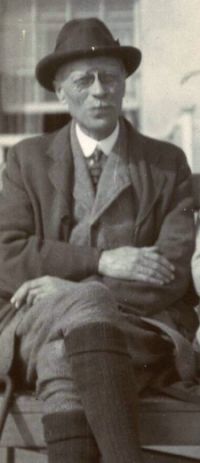
James Hosmer Penniman

Biographical details

James Hosmer Penniman,  Books and how to make the most of them (1911)

“ Rousseau thought that “the abuse of reading is destructive to knowledge. Imagining ourselves to know everything we read, we conceive it unnecessary to learn it by other means.”
“Literature is not shut up in books nor art in galleries: both are taken in by unconscious absorption through the finer pores of mind and character in the atmosphere of society,” said Lowell; and Emerson wrote, “books are for the scholar’s idle times: when he can read God directly, the hour is too precious to be wasted in other men’s transcripts of their readings.
”
Source: Gutenberg

James Hosmer Penniman,  Children and Their Books

“ There is a distinction which teachers and parents do not always recognize between books, which are beyond the child merely because of the hard words in which the idea is clothed and those in which the thought itself is above his comprehension. "Children possess an unestimated sensibility to whatever is deep or high in imagination or feeling so long as it is simple likewise. It is only the artificial and the complex that bewilder them," said Hawthorne, and because of his knowledge of this fact he wrote his exquisite classics for children. ”
Source: Gutenberg

James Hosmer Penniman,  Books and how to make the most of them (1911)

“ All facts in history are in some way related, though we often lose the connection through ignorance of intervening facts or events, or through lack of knowledge of even whole centuries of human life and struggle.
The Old Testament regarded as actual human history is a series of documents pulsating with the very life and heartbeats of real men. It is no dry theology or book apart from great movements of mankind. It is the living record of one part of our race. History interprets for us the present and enables us to predict the future.
”
Source: Gutenberg

Get perspective with Kwize: daily news enlightened by great literature