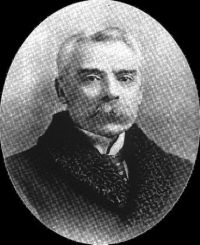
Laurence Housman and Edward Fairbrother Strange

Biographical details

Laurence Housman and Edward Fairbrother Strange 1911 Encyclopædia Britannica (1911)

But from the moment when the designer began to put his own lines upon the wood, new conditions shaped themselves; and though the artist at times might make demands which the engraver could not follow, or the engraver inadequately fulfil the expectation of the artist, the general tendency was to bring designer and engraver into almost ideal relations—an ideal which nothing short of the artist being his own engraver could have equalled.
Source: Wikisource

Laurence Housman and Edward Fairbrother Strange 1911 Encyclopædia Britannica (1911)

The restoration of life to a dead body, of a child to its mother, is there conveyed with many illustrative touches and asides, which become clumsy when stated in words. The hen bearing her chicken between her wings is a perfectly direct and appropriate pictorial symbol, but a far more imaginative stroke is the shadow on the wall of a swallow flying back to the clay bottle where it has made its nest. Here is illustration full of literary symbolism, yet wholly pictorial in its means
Source: Wikisource

Laurence Housman and Edward Fairbrother Strange 1911 Encyclopædia Britannica (1911)

Typical of an older German school is the work of Adolf Oberländer, a solid, scientific sort of caricaturist, whose illustrations are at times so monumental that the humour in them seems crushed out of life. Others who command high qualities of technique are W. Dietz, L. von Nagel, Hermann Vogel, H. Lüders and Robert Haug. Behind all these men in greater or less degree lies the influence of Menzel’s coldly balanced and dry-lighted realism; but wherever the influence of Menzel ceases, the merit of German illustration for the most part tends to disappear or become mediocre.
Source: Wikisource

Get perspective with Kwize: daily news enlightened by great literature