“ You know, my dear, the servants are all as old as we are. I don't really believe there is anyone in our road that can run."The other laughed comfortably and agreed, but Jean felt chilled a little, as if a cloud had obscured for a second the sun of her happiness. In this gloriously young world of unfolding leaves and budding hawthorns and lambs and singing birds and lovers, there were people old and done who could only walk slowly in the sunshine, in whom the spring could no longer put a spirit of youth, who could not run without being weary. ”
O. Douglas
Biographical details
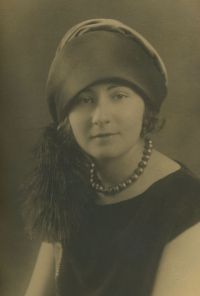
O. Douglas, the pen name of Anna Masterton Buchan (1877–1948), was a Scottish novelist renowned for her gentle, humorous portrayals of domestic life in southern Scotland, often drawn from her own experiences. Her works, including Olivia in India (1912), The Setons (1917), Penny Plain (1920), and Ann and Her Mother (1922), focus on the quiet rhythms of small-town existence, emphasizing warmth and moral clarity over political or social turmoil.
Critics noted her characters’ “pleasantness” as both a hallmark and a point of contention, yet her novels offered respite during an era dominated by stark realism. Buchan’s legacy endures through her intimate depictions of familial and communal bonds, preserved alongside her brother John Buchan’s works at the John Buchan Museum in Peebles.
Quotes by O. Douglas
“ It was a picture of a pine-wood, with a small girl in a blue frock and white pinafore and red stockings, crying bitterly under a tree, in the branch of which a doll hung limply, thrown there by cruel brothers. Through the trees the sunset sky was pale green melting into rose-colour, and the wicked little gnomes that twilight brings were tweaking the child's hair and jeering at her misfortunes. One felt how cold it was, and how badly the little girl wanted her hood and cloak. The darkness was very near, and worse things than little gnomes would slip from behind the tree-trunk trunks. ”
O. Douglas, Penny Plain — CHAPTER X (1920)
“ Once, when Augusta was a child, someone asked her what she would like to be, and she had replied, "A lady like mamma." She had never lost the ambition, though very soon she had known that it could not be realised. It was difficult to believe that she was Mrs. Hope's daughter, for she had no trace of the beauty and sparkle with which her mother had been endowed. Augusta had a long, kind, patient face—a drab-coloured face—but her voice was beautiful. She had never been young; she was born an anxious pilgrim, and now, at fifty, she seemed infinitely older than her ageless mother. ”
O. Douglas, Ann and Her Mother
“ I don't know anyone who made more of life. She might have been a lonely, soured old woman, for she was the very last of her family, wasn't she? but to the great family of the poor and the afflicted she said, 'You are my brothers and my sisters.' I wonder how many men in Glasgow owe their start in life to Miss Barbara? I wonder how many lonely women died blessing her that it was their own and not a workhouse roof that covered them at the end? I wonder how many betrayed souls sinking hopelessly into hell had a succouring hand held out to them by that sharp-tongued spinster? ”
O. Douglas, Penny Plain — CHAPTER III (1920)
“ Pamela said."Much too fond," Jean confessed. "I'm a 'rake at reading.'""You know the people," said Pamela, "who say, 'Of course I love reading, but I've no time, alas!' as if everyone who loves reading doesn't make time."As they talked, Pamela realised that this girl who lived year in and year out in a small country town was in no way provincial, for all her life she had been free of the company of the immortals. The Elizabethans she knew by heart, poetry was as daily bread. Rosalind in Arden, Viola in Illyria, were as real to her as Bella Bathgate next door. ”
“ Jean walked in a dream. On just such an April day, when shepherds pipe on oaten straws, Shakespeare himself must have walked here. It would be different, of course; there would be no streets of little mean houses, only a few thatched cottages. But the larks would be singing as they were to-day, and the hawthorn coming out, and the spring flowers abloom in Anne Hathaway's garden. ”
O. Douglas, Penny Plain — CHAPTER XXI (1920)
“ There is no charm in a room furnished from showrooms, though it be correct in every detail to the period chosen. Much more human is the room that is full of things, ugly, perhaps, in themselves but which link one generation to another. The ottoman worked so laboriously by a ringleted great-aunt stood with its ugly mahogany legs beside a Queen Anne chair, over whose faded wool-work seat a far-off beauty had pricked her dainty fingers—and both of the workers were Hopes: while by Pamela's side stood a fire-screen stitched by Augusta, the last of the Hopes. ”
“ Elizabeth sat up very straight. "Oh! If you look at life from that sort of 'from-hour-to-hour-we-ripe-and-ripe-and-then—from-hour-to-hour-we-rot-and-rot' attitude, it is a tragic thing to grow old. But surely life is more than just a blooming and a decay. Life seems to me like a Road—oh! I don't pretend to be original—a road that is always going round corners. And when we are quite young we expect to find something new and delightful round every turn. ”
“ One might almost have imagined oneself in the Park, if it had not been that now and again a strange equipage would pass filled with natives, men and boys gorgeous in purple and scarlet and gold, or closed carriages like boxes on wheels, in which sat dark-skinned women demurely veiled. From the Red Road we drove to the Strand, a carriage-way by the river where the great ships lie, and watched the sun set and the spars and masts become silhouetted against the red sky. ”
O. Douglas, Penny Plain — CHAPTER XV (1920)
“ The room had looked as he had known it would look, with a fire that sparkled as only Jean's fire ever sparkled, and Jean's eyes—Jean's "doggy" eyes, as Mhor called them—were lit with interest; and Jock and Mhor and Peter crept in after a little and lay on the rug and gazed up at him, a quiet and most satisfactory audience.Jean felt a little in awe of this younger brother of hers, who had suddenly grown a man and spoke with an air of authority. She had an ache at her heart for the Davie who had been a little boy and content to lean; she seemed hardly to know this new David. ”
O. Douglas, Olivia in India — PART II (1922)
“ If I hadn't known from Boggley that you were, as he puts it, a perfect jewel, I think I should have shrunk away from before you that first day we met and sat next each other at lunch. I remember I talked a great deal of nonsense, partly, I think, because I was rather afraid of you; and somehow or other we have always gone on talking nonsense to each other since. It has become a habit.But you don't really want to have a great crowd of friends, do you? It is only weak-minded people like myself who flop on any stranger's neck with protestations of undying affection. ”
O. Douglas, Penny Plain — CHAPTER X (1920)
“ Mrs. Hope was sitting by the fire in the drawing-room, a room full of flowers and books, and lit by four long windows. Two of the windows looked on to the lawns, and the stone figures chipped by generations of catapult-owning boys; the other two looked across the river into the Hopetoun Woods. The curtains were not drawn though the lamps were lit, for Mrs. Hope liked to keep the river and the woods with her as long as light lasted, so the warm bright room looked warmer and brighter in contrast with the cold, ruffled water and the wind-shaken trees outside. ”
O. Douglas, Ann and Her Mother
“ One day, to my joy, I found in a small grocer's shop tiny pots of jam and marmalade that cost one penny each, and Rosamund loved them for her dolls' tea-parties. If we could find anything to interest or amuse her, we were so proud. At first she was able to have us play quietly with her, then she began not to be able to walk about, and Mark carried her round the garden to look at the snowdrops and crocuses. We never owned to ourselves or each other that she wouldn't recover. ”
O. Douglas, Penny Plain — CHAPTER II (1920)
“ They had been forty-five quite happy years for Peter Reid. Money-making was the thing he enjoyed most in this world. It took the place to him of wife and children and friends. He did not really care much for the things money could buy; he only cared to heap up gold, to pull down barns and build greater ones. Then suddenly one day he was warned that his soul would be required of him—that soul of his for which he had cared so little. After more than sixty years of health, he found his body failing him. ”
O. Douglas, Penny Plain — CHAPTER I (1920)
“ As I have said, it was tea-time in Priorsford.The schools had skailed, and the children, finding in the weather little encouragement to linger, had gone to their homes. In the little houses down by the riverside brown teapots stood on the hobs, and rosy-faced women cut bread and buttered scones, and slapped their children with a fine impartiality; while in the big houses on the Hill, servants, walking delicately, laid out tempting tea-tables, and the solacing smell of hot toast filled the air. ”
O. Douglas, Olivia in India — PART III (1922)
“ We left Takai on Wednesday, I in my old friend the doolie, Boggley on his bicycle. It is wonderful where a bicycle can go in India.I was much sorrier to leave Takai than I thought I should be, and I think they were a little sorry to see me go. Even the missionary ladies unbent so far as to say they would miss my bright face and merry chatter. How differently people describe things! Bright and merry are hardly the adjectives I should have applied to my soulful countenance and brilliant conversation; but no matter. They all stood on the verandah to watch us go. ”
“ There never was any lack of callers at Jeanieville. It was such a vastly comfortable house to call at. The fire burned so brightly, the tea was so hot and fresh, the scones so delicious, and the shortbread so new and crimpy; and when Mrs. Thomson with genuine welcome in her voice said, "Well, this is real nice," no matter how inclement the weather outside each visitor felt the world a warm and kindly place. ”
“ Miss Phemie does the flowers and embroiders beautiful things and is like a tea-cosy, so soft and warm and comfortable. Somehow they always seem to be there when you want them. You never go to their door and get a dusty answer. There is the same welcome for everyone, gentle and simple, and always the bright fire, and the kind, smiling faces, and tea with thick cream and cake of the richest and freshest.... You know how some people beg you to visit them, and when you go they seem to wear a surprised look, and you feel unexpected and awkward? The Duncans make you feel so pleased with yourself. ”
“ Outside the guides wait, Joseph and Aloys, and away we tramp in single file along the little path that runs through fields full of wild flowers, drenched with dew, into a fairy-tale wood of tall, straight pine-trees. We follow the steady, slow footsteps of Joseph, the chief guide, up the winding path that turns and twists, and turns again, but rises, always rises, until we are clear of the wood, past the rough, stony ground, and on to the snow, firm and hard to the feet before the sun has melted the night's frost. ”
O. Douglas, Ann and Her Mother
“ November is a poor time to go to a new place, and Kirkcaple certainly looked a most unattractive part of the world when we arrived on a cold, wet afternoon. 'The queer-like smell' from the linoleum factories, the sea drearily grey and strange to my inland eyes, the drive through narrow streets and up the steep Path, past great factories and mean houses, until we reached the road, knee-deep in mud, where the Manse stood, combined to depress me to the earth. ”
“ Heaven is much the realest place there is to Father. I do believe that when he is toiling away in the Gorbals he never sees the squalor for thinking of the streets of gold." Elizabeth's grey eyes grew soft for a moment with unshed tears, but she blinked them away and laughed. "The nicest thing about my father is that he is full of contradictions. So gentle and with such an uncompromising creed! The Way is the Way to Father, narrow and hard and comfortless. And he is so good, so purely good, and yet never righteous over much. ”
“ It's the hardest thing for me to keep from being happy. Great-aunt Alison said I had a light nature. Even when I ought to be sad my heart jumps up in the most unreasonable way, and I am happy. But sometimes it feels as if we comfortable people are walking on a flowery meadow that is really a great quaking morass, and underneath there is black slime full of unimagined horrors. A paragraph in the newspaper makes a crack and you see down: women who take money for keeping little babies and allow them to die, men who torture: tales of horror and terror. ”
“ Every minute of my time is filled up with river-picnics, garden-parties, tennis tournaments, dinners and theatre parties; and my mornings are spent with G. raking in queer shops for curiosities. I am insatiable for things to take home, and Autolycus has packed and roped three large wooden boxes containing my treasures.I wish life weren't such a mixed thing. Just when I am tiptoeing on the heights of joy because I am going home, I am brought to common earth with a thud by the miserable thought that I must leave Boggley. ”
O. Douglas, Ann and Her Mother
“ Ann looked up from her writing. "Hadn't you—I seem to remember—a cookery book from that class, a fat green book? It stood, for some reason, on the nursery bookshelf, and was a sort of Aladdin's Cave to us children. We pored over it, reading aloud the rich, strange ingredients, and lay on our faces gazing enraptured at the picture of a dinner-table laid for about sixty people, where each napkin was folded in a different way, and pheasants with long tail-feathers sat about in dishes, and brightly tinted jellies and creams and trifles made it blossom like a fairy garden. ”
“ James Seton smiled at his daughter. "Lazy, Lizbeth, that's all—lazy and growing old!" "Old?" said Elizabeth. "Why, Father, you're the youngest person I have ever known. You're only about half the age of this weary worldling your daughter. You can never say you're old, wicked one, when you enjoy fairy tales just as much as Buff. I do believe that you would rather read a fairy tale than a theological book. He can't deny it, Kirsty. ”
“ January is always a long, flat month: the Christmas festivities are over, the bills are waiting to be paid, the weather is very often of the dreariest, spring is yet far distant. With February, hope and the snowdrops begin to spring, but January is a month to be warstled through as best we can.This January of which I write Jean felt to be a peculiarly long, dull month. She could not understand why, for David was at home, and she had always thought that to have the three boys with her made up the sum of her happiness. She told herself that it was Pamela she missed. ”
“ No, I don't think a new environment changes people, and it is foolish to think it makes them forget. Sometimes in the Eden Gardens at sunset, when we draw up to listen to the band, I watch the faces of the youths—Scots boys come out from Glasgow and Dundee—dreaming there in the Indian twilight while the pipers play the tunes familiar to them since childhood. They are sahibs out here, they have a horse to ride and a servant to look after them, things they never would have had had they stayed in Dundee or Glasgow, but though they are proud they are lonely. ”
O. Douglas, Ann and Her Mother
“ The men who came back will, most of them, have to fight a grim struggle, for living is none too pleasant just now, and they will grow old, and bald, and ill-tempered, and they have all to die in the end. What is twenty more years of life but twenty more years of fearing death? But our men whose sacrifice was accepted, and who were allowed to pour out the sweet, red wine of youth, passed at one bound from glorious life to glorious life. 'Eld shall not make a mock of that dear head.' They know not age or weariness or defeat. ”
“ Surely someone will like me well enough to live with me—perhaps Buff, if he continues to have the contempt for females that he now has; but anyway I shall hold on to the bright fire and the singing kettle and the bag of lollipops." She sat for a moment, absent-eyed, as if she were looking down the years; then she laughed. "But I shall be a frightfully long gaunt spinster," she said. Arthur laughed with her, and said: "Elizabeth, you aren't really a grown-up woman at all. You're a schoolboy." "I like that 'grown-up,'" she laughed; "it sounds so much less mature than the reality. ”
“ It wouldn't be honest to praise poor work."Jean shook her head. "They could always be a little kind ... Pamela, I love myself in this coat. You can't think what a delight colours are to me." She stopped, and then said shyly, "You have brought colour into all our lives. I can see now how drab they were before you came.""Oh dear, no, Jean, your life was never drab. It could never be drab whatever your circumstances, you have so much happiness within yourself. I don't think anything in life could ever quite down you, and even death—what of death, Jean?" ”
O. Douglas, Ann and Her Mother
“ I like domestic fiction, gentle but not drivelling, good character drawing and a love story that ends all right." "In other words," said Ann, "good print and happy ending. What about me? Why shouldn't I become the writer for middle-aged women? I might almost call myself a writer now that I have wrestled for weeks with your Life, and I believe I would find it easier to write fiction than biography—to leave what Marget calls 'facs' and take to 'lees.' Facts crib and cabin one. Given a free hand I might develop an imagination." ”
“ It made the thought of tea-time at home so very attractive. She jumped on a tram-car and squeezed herself in between two stout ladies. The car was very full, and the atmosphere heavy with the smell of damp waterproofs. Dripping umbrellas, held well away from the owners, made rivulets on the floor and caught the feet of the unwary, and an air of profound dejection brooded over everyone. Generally, Elizabeth got the liveliest pleasure from listening to conversation in the car, but to-day everyone was as silent as a canary in a darkened cage. ”
“ The weather is beginning to stoke-up, as Boggley calls it, and during the day the tent is insufferable. I can sit outside it in the early morning, but as the sun gets up Autolycus summons the chuprassis, and they carry my table and writing-materials to the verandah of the Guest House, which has a cool, not to say clammy and tomb-like, atmosphere. My chief trials are the insects. There is a land of large black beetle with wings that has a strange habit of poising itself just above my head and remaining there. ”
“ As if you didn't know that you are infinitely more attractive than any young girl. I never know why people talk so much about youth. What does being young matter if you're awkward and dull and shy as well? I'd far rather be middle-aged and interesting.""That," said Pamela, as she laid her treasures back in the box, "is one of the minor tragedies of life. One begins by being bored with being young, and as we begin to realise what an asset youth is, it flies. Rejoice in your youth, little Jean-girl, for it's a stuff will not endure.... ”
O. Douglas, Ann and Her Mother
“ The youngest never grows up, and to each of us Davie seemed almost more a son than a brother, and we never lost for him—even when he was grown up and a soldier—the almost passionate tenderness that we had for the little delicate boy. He was the delight of our lives, always. I remember when I arrived in India almost the first thing Robbie wanted to be told was Davie's latest sayings. He had a name for each of us peculiarly his own. Nobody ever called me 'Nana' but Davie, and why he christened Jim 'Ney' no one ever knew. But, Mother, it was only as a baby that he was so very plain. ”
“ They got back into the car and it sprang away as if suddenly endowed with new life. In a trice they had passed the wagonette, leaving it in a whirl of scornful dust. They ate the miles as a giant devours sheep. They passed the Devil's Beef Tub—Jock would have liked to tarry there and investigate, but Jean dared not ask Stark to stop in case they could not start again—and soon went sliding down the hill to Moffat. Hot puffs of scented air rose from the valley, they had left the moorlands and the winds, and the town was holding out arms to welcome them. ”
“ Now Peter has gone to school and has put away childish things, and the desire to be a knight like Launcelot. He no longer babbles to himself in such a way as to make strangers doubt of his sanity; and he confided to me lately that when he grew up he hoped to lead a Double Life. He who was brought up in Camelot, he who wept when Roland at Roncesvalles blew his horn for the last time, now devours blood-curdling detective stories, vile things in paper covers, which he keeps concealed about his person, and whips out at odd moments. What he hates is a book with the slightest hint of a love affair. ”
“ Jean, looking back rather wistfully at The Rigs, got a last sight of Mrs. M'Cosh shaking her head dubiously at the departing car.One of the best things in life is to start on a spring morning for a holiday. To Jock and Mhor at least life seemed a very perfect thing as the car slid down the hill, over Tweed Bridge, over Cuddy Bridge, and turned sharp to the left up the Old Town. Soon they were out of the little grey town that looked so clean and fresh with its shining morning face, and running through the deep woods above Peel Tower. ”