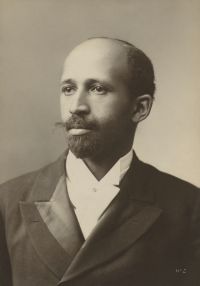
Sterling A. Brown

Biographical details

Sterling A. Brown,  The Negro in American fiction (1938)

“ Stowe’s genius “instinctively goes right to the organic elements of human nature, whether under a white skin or black;” and at their best the other antislavery authors do like wise. When a mother is separated from her child, they show the grief of a bereft mother, not a mother of peculiar racial endowments who cannot love her children because she and they happen to be black. If she is not grief-stricken, they lay the blame upon the brutalizing of slavery, not on a racial characteristic that it soothed slave-holders to believe in. ”
Source: Gutenberg

Sterling A. Brown,  The Negro in American fiction (1938)

“ A foundling, the son of a white mother and a Negro father, he is raised by his fanatical grandfather. Taken for white until the mystery of his birth is cleared up, he is silent, friendless and proud. After he murders a sex-obsessed Yankee woman, a relic of Reconstruction, he is pursued and killed. Although one character imputes his tragedy to the warfare in him of white and black, there is sufficient reason to see him as a victim of a hostile environment. He is more complex than Faulkner’s other Negroes, fully characterized, and one of Faulkner’s most memorable creations. ”
Source: Gutenberg

Sterling A. Brown,  The Negro in American fiction (1938)

“ Although various cities beckoned—Pittsburgh with its steelmills, Chicago with its stockyards, Detroit with its automobile factories—it was Harlem that became the Mecca for the southern Negro, the West Indian, and the African. One historian of Harlem states that it contains more Negroes to the square mile than any other spot on earth. Harlem became a Mecca likewise for white pleasure seekers from downtown and abroad, who, hunting the new thrill with the desperate eagerness of the post-war generation, rushed to what they considered a place of primitive abandon, of unfailing “joy of life.” ”
Source: Gutenberg

Get perspective with Kwize: daily news enlightened by great literature