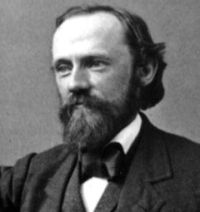
William H Walling

Biographical details

William H Walling,  Sexology (1909)

“ Love, then, as soon as it is determined and fixed by marriage, tends to free itself from the tyranny of the organs. It is this imperious tendency (of which man is warned from the first day by the fatigue of his senses, and upon which so many persons build such wretched illusions) that the proverb expresses: 'Marriage is the tomb' that is to say, the emancipation, 'of love.' The people, whose language is always concrete, have intended here by love the violence of desire, the fire of the blood; it is this entirely physical love which, according to the proverb, is extinguished in marriage. ”
Source: Wikisource

William H Walling,  Sexology (1909)

“ Time whitens their heads without disenchant- ing their spirit. Besides, a man of good constitution, whom age has not yet overpowered, still experiences per- fidious and tempting reminiscences; all seems young in him except the date of his birth. His years are expended, but not his strength. He admits to himself that desire is not as pressing as formerly; that he no longer feels that excess of life, that fire, that ardor, which once inflamed his blood and his heart, but he does not deem himself an athlete so disarmed that he ought entirely to abandon the contest and the triumph. ”
Source: Wikisource

William H Walling,  Sexology (1909)

“ The world, in its native chastity and its infinite delicacy, has not wished to reveal the secret of the nuptial couch; it has left to the wisdom of each one the care of penetrating the mystery, and of profiting by the instruction. It knows, however, that veritable love begins with this death; that it is a necessary effect of marriage that gallantry shall change into worship; that every husband, whatever he may pretend, is at the bottom of his soul idolatrous; that if there is an ostensible conspiracy among men to shake off the yoke of the sex, there is a tacit agreement to adore it ”
Source: Wikisource

Get perspective with Kwize: daily news enlightened by great literature