
“ And there was no time nor life nor death, but only this, this timeless consummation, where the thrust from earth met the thrust from earth and the arch was locked on the keystone of ecstasy. This was all, this was everything. Till he came to himself in the world below. Then again he gathered himself together, in transit, every jet of him strained and leaped, leaped clear into the darkness above, to the fecundity and the unique mystery, to the touch, the clasp, the consummation, the climax of eternity, the apex of the arch. ”
Consummation
Definition and stakes
Consummation, broadly defined, signifies a state of fulfillment, completion, or ultimate realization, often marked by a climax or transformative moment. In literature and philosophy, it has been explored through diverse lenses: D.H. Lawrence evokes it as a transcendent, almost spiritual union in The Rainbow, where ecstasy and timelessness merge; John Dewey examines it in economic terms, linking production and consumption as energy conversions.
Other thinkers, like Marx, frame it as a biological or social process, while economists such as Veblen and Roscher analyze its role in human behavior and resource distribution. The theme thus bridges personal, existential, and material dimensions, revealing consummation as both a peak experience and a dynamic force shaping human endeavor.
Quotes about “consummation”
 John Dewey,
Human Nature and Conduct: An introduction to social psychology
John Dewey,
Human Nature and Conduct: An introduction to social psychology
“ A more complicated instance is found in the dominant quality of our industrial activity. It may be dogmatically declared that the roots of its evils are found in the separation of production from consumption—that is, actual consummation, fulfilment. A normal case of their relationship is found in the taking of food. Food is consumed and vigor is produced. The [pg 271] difference between the two is one of directions or dimensions distinguished by intellect. In reality there is simply conversion of energy from one form to another wherein it is more available—of greater significance. ”
“ Here the stone leapt up from the plain of earth, leapt up in a manifold, clustered desire each time, up, away from the horizontal earth, through twilight and dusk and the whole range of desire, through the swerving, the declination, ah, to the ecstasy, the touch, to the meeting and the consummation, the meeting, the clasp, the close embrace, the neutrality, the perfect, swooning consummation, the timeless ecstasy. ”
 Thomas Hardy,
Satires of Circumstance, Lyrics and Reveries…
Thomas Hardy,
Satires of Circumstance, Lyrics and Reveries…
“ Till the Spinner of the Years Said “Now!” And each one hears, And consummation comes, and jars two hemispheres. ”
Duchess of Margaret Cavendish Newcastle, Grounds of Natural Philosophy: Divided into Thirteen Parts
“ There are many sorts of Consumptions; as, some are Consumptions of the Vital Parts, as the Liver, Lungs, Kidneys, or the like Parts: Others, a Consumption of the Radical Parts: Others a Consumption of the Spiritous Parts: Other Consumptions are only of the Flesh; which, in my opinion, is the only Curable Consumption. But, all Consumptions, are not only an Alteration, but a Wasting and Dis-uniting of the Fundamental Parts; only those Consuming Parts do, as it were, steal away by degrees; and so, by degrees, the Society of a Human Creature is dissolved. ”
 Karl Marx,
A Contribution to the Critique of Political Economy
(1904)
Karl Marx,
A Contribution to the Critique of Political Economy
(1904)
“ Let us then consider consumption proper. Consumption is directly also production, just as in nature the consumption of the elements and of chemical matter constitutes production of plants. It is clear, that in nutrition, e. g., which is but one form of consumption, man produces his own body; but it is equally true of every kind of consumption, which goes to produce the human being in one way or another. ”
Henry Thompson, Popular Science Monthly (1879)
“ But when the inexorable necessity for duly considering economy has been complied with, the next aim is to render food as easily digestible as possible, and agreeable to the senses of taste, smell, and sight. ”
Geo. T. Fairchild, Rural Wealth and Welfare: Economic Principles Illustrated and Applied in Farm Life
“ Vicious consumption.—It is customary to distinguish from all other forms of imprudent consumption of wealth such vicious indulgence of appetites as not only consumes accumulated wealth but diminishes power in production. ”
David Starr Jordan, The Call of the Twentieth Century…
“ In our material life we draw our resources from every land. Clothing, spices, fruits, toys, household furniture,—we lay contributions on the whole world for the most frugal meal, for the humblest dwelling. ”
 Wilhelm Roscher,
Principles of Political Economy…
Wilhelm Roscher,
Principles of Political Economy…
“ Every change in the consumption-customs of a people, in this respect, should be most carefully observed; thus, for instance, whether brandy is exchanged for beer, tobacco for meat, cotton for cloth, or the reverse. ”
Baron Arthur Ponsonby Ponsonby, The Camel and the Needle's Eye
“ This is a fair metaphor, because we have all been forced to learn the precise nature of our limitations with regard to the consumption of food. Is it unreasonable to hope that in time we may become as conscious of our limitations in the consumption of other materials no less important? ”
 John Bates Clark,
Essentials of Economic Theory
John Bates Clark,
Essentials of Economic Theory
“ The general fact, however, that goods for final use are, as a rule, injured or destroyed either by the act of consumption or by the exposures that are incidental to it, justifies the use of this term to express the receiving of a service from the usable article. It is a process in which the commodity acts on men's sensibilities and, as a general rule, exhausts itself while so doing. It is worth remembering that this exhaustion of the good is not the essential part of consumption. ”
 Howard Williams,
The Ethics of Diet
Howard Williams,
The Ethics of Diet
“ Why do you thus gorge your own body with excess, and waste that of the poor with want? Consider what comes of food—into what it is changed. Are you not disgusted at its being named? Why, then, be eager for such accumulations? The increase of luxury is but the multiplication of filth. [96] For Nature has her limits, and what is beyond these is not nourishment, but injury and the increase of ordure.“Nourish the body, but do not destroy it. Food is called nourishment, to show that its purpose is not to hurt, but to support us. ”
 Charlotte Perkins Gilman,
Women and Economics
Charlotte Perkins Gilman,
Women and Economics
“ Human nutrition is a long process. There’s many a ship ’twixt the cup and the lip, to paraphrase an old proverb. Food is produced by the human race collectively,—not by individuals for their own consumption, but by interrelated groups of individuals, all over the world, for the world’s consumption. ”
 Thorstein Veblen,
The Theory of the Leisure Class
(1899)
Thorstein Veblen,
The Theory of the Leisure Class
(1899)
“ Another, scarcely less obtrusive or less effective form of vicarious consumption, and a much more widely prevalent one, is the consumption of food, clothing, dwelling, and furniture by the lady and the rest of the domestic establishment. ”
Alfred Charles Michaud, Our coming world (1951)
“ They, in time of plenty, reserve and store away food. But this is food necessary for their body consumption, not gold, silver, copper, or paper money for which they have no use. They cannot eat or cover themselves with it. ”
Various, Lippincott's Magazine of Popular Literature and Science…
“ Consumption. Once our fathers were wild and lived in the open air: they scarcely ever died, as we do, of consumption. Crowded cities, bad drainage, overwork, want of healthful exercise, stimulating food, dissipation,—these are human cage-life. If a man is threatened with consumption, let him go back to the plains and forests before it is too late. ”
 R. H. Chittenden,
The nutrition of man
R. H. Chittenden,
The nutrition of man
“ Relationship between food consumption and prosperity. Erroneous ideas regarding nutrition. Commercial success and national wealth not the result of liberal dietary habits. Instinct and craving not wise guides to follow in choice and quantity of food. ”
Richard Valpy French, Nineteen Centuries of Drink in England…
“ The merchants of the country, who brought the victuals into the camp, unaccustomed to the wonderful consumption, could hardly credit that what they saw was true, that a single people, and that small in number, should consume three times as much bread, and a hundred times as much wine, as that on which many nations of the heathen, and each of them innumerable, lived. ”
Harold L. Goodwin, The Egyptian Cat Mystery: A Rick Brant Science-Adventure Story
“ Merchants hawked their wares with raucous cries, charcoal braziers smoked under assorted foodstuffs, and the air was redolent with the odors of food, people, and the accumulated living of many centuries. ”
 Dyce Duckworth,
Popular Science Monthly
(1881)
Dyce Duckworth,
Popular Science Monthly
(1881)
“ All classes of persons are supposed to use milk, to some amount, as a matter of course. And although adults are not supposed to take very much, save what they consume with tea and coffee, yet children are commonly credited with the consumption of a good deal, or, at all events, of a sufficiency, of this commodity. ”
Household Administration, Its Place in the Higher Education of Women
“ Yet if it is important to know how the wealth of the country is produced, it is of equal importance to know how it is consumed, and that whether the consumption takes the form of porridge and flannelette for the child of a dock-labourer, of drink and admission to a football match for the miner or cotton-operative, or of a gardener, and a holiday in Switzerland for the hard-working doctor or stockbroker. ”
Ian Hay, The Times — The New America
“ Every one turned to every one else and said, "What can I do to help?" Some people began to practise a vague and unmethodical, system of food economy. Others, following a natural instinct, began to hoard. ”
 Horace Fletcher,
The New Glutton or Epicure
Horace Fletcher,
The New Glutton or Epicure
“ At first, rules have to be followed in order to serve Economic Nutrition to the best advantage, but they soon become habits of life, or living, that will naturally come of themselves from attention to Taste according to these directions. ”
 Marcus Tullius Cicero,
Cicero's Tusculan Disputations
(1888)
Marcus Tullius Cicero,
Cicero's Tusculan Disputations
(1888)
“ By our labor, that is, by our hands, variety and plenty of food are provided; for, without culture, many fruits, which serve either for preesent or future consumption, would not be produced; besides, we feed on flesh, fish, and fowl, catching some, and bringing up others. ”
Frank Frost Abbott, The Common People of Ancient Rome
“ In the way of articles offered for sale, we miss certain items which find a place in every price-list of household necessities, such articles as sugar, molasses, potatoes, cotton cloth, tobacco, coffee, and tea. ”
 Louis F. Post,
The basic facts of economics
(1927)
Louis F. Post,
The basic facts of economics
(1927)
“ Consumption of food is a natural effect of the natural necessity for food—a natural law. Production of food is a natural effect of the natural need of food for consumption—a natural law. Resort to Natural Resources as the sole source and foundation from and upon which to produce food is a natural effect caused by the natural need for food—a natural law. ”
Horace Fletcher,
The New Glutton or Epicure
“ The influence of visible supply or of passing or permanent opportunity of possession is a most powerful suggestion in the cultivation of economy or prodigality, of greed or moderation, of healthy nouriture or plethoric indigestion.Man was constructed and intended to hunt his food among the grains, nuts, roots, and other fruits of earth, and in hunting food to earn a keen appetite. He found his food scattered and ate it as he found it, with the true appreciation that difficulty of possession gives. In the primitive state the requirements of natural digestion are safeguarded ”
 Angela Brazil,
A Patriotic Schoolgirl
Angela Brazil,
A Patriotic Schoolgirl
“ We can do without money; but we cannot [212] do without food. People see the bakers' shops full of bread, the butchers' shops full of meat, the grocers' shops full of provisions, and they believe there is plenty of food. ”
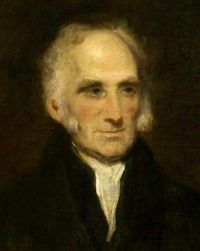 Sir Gilbert Blane,
Observations on the Diseases of Seamen
Sir Gilbert Blane,
Observations on the Diseases of Seamen
“ It is upon this principle that luxury renders the great quantities of food we take in necessary; and those species of food which satisfy most by their stimulus are by no means such as are the most nutritious. It is also upon this principle, that in cases of accidental hardship from want of food, or in barren and inclement countries where food is scarce, the body is supported, in some measure, by what contains little or no nutritious matter, such as pure water, or the bark of trees powdered and kneaded into a sort of bread, as we are told of the inhabitants of Lapland. ”
 John Stuart Mill,
Principles of Political Economy
(1871)
John Stuart Mill,
Principles of Political Economy
(1871)
“ But it is another thing altogether, when those who have produced and accumulated are called upon to abstain from consuming until they have given food and clothing, not only to all who now exist, but to all whom these or their descendants may think fit to call into existence. ”
Chas. A. Tyrrell, The Royal Road to Health; Or, the Secret of Health Without Drugs
“ In the olden days, when man toiled hard for existence, food was produced within his own immediate radius and luxuries were unknown; but now, with rapid ocean transportation, the ends of the earth are ransacked and laid under tribute to furnish delicacies to tempt the palate. The ease with which food may now be procured and the almost illimitable variety offered to man for his selection has tempted him into indulgences that have been productive of much evil. ”
Samuel Butler, Luck, or Cunning, as the Main Means of Organic Modification
“ Food is money made easy; it is petty cash in its handiest and most reduced form; it is our way of assimilating our possessions and making them indeed our own. What is the purse but a kind of abridged extra corporeal stomach wherein we keep the money which we convert by purchase into food, as we presently convert the food by digestion into flesh and blood? And what living form is there which is without a purse or stomach, even though it have to job it by the meal as the amœba does, and exchange it for some other article as soon as it has done eating? ”
Emory S. Bogardus, A history of social thought (1922)
“ The Canon of Conspicuous Consumption is a term which describes a method of showing off one’s wealth by an elaborate consumption of goods.XXIII-65 Conspicuous consumption is seen more in matters of dress than in any other line of consumption. ”
Merton Leland Miller and Lester Frank Ward, The American Journal of Sociology (1896)
“ The modern tendency on the part of the economist to recognize consumption as an important factor in economic discussion is a product of the unconscious and unnamed movement above referred to, which is nothing less than a movement that has been slowly progressing for ages for a pain economy towards a pleasure economy. ”
 William Cobbett,
Cottage Economy, to Which is Added The Poor Man's Friend
William Cobbett,
Cottage Economy, to Which is Added The Poor Man's Friend
“ For leaving out of the question the slovenly and beastly habits engendered amongst the labouring classes by constantly lifting their principal food at once out of the earth to their mouths, by eating without the necessity of any implements other than the hands and the teeth, and by dispensing with everything requiring skill in the preparation of the food, and requiring cleanliness in its consumption or preservation ”
Jacques W. Redway, Commercial Geography
“ The maté of commerce has a stimulant principle identical with that of tea and coffee, which is the only reason for its use. The consumption, about fifteen thousand tons a year, is confined almost wholly to the countries named. ”
King of Great Britain Edward VII, Speeches and Addresses of H. R. H. the Prince of Wales…
“ Now, in arguing the case with his friend, he did not go into the abstruse question whether all persons who dealt in articles of general demand and great consumption, useful in themselves, and capable of being misapplied or abused, such as food, or drink, or money, or physic, or a great many other things which, excellent in themselves in a small quantity, might be most deleterious, when misapplied—were monsters. ”
Margaret Bertha Synge, A Short History of Social Life in England (1906)
“ Articles now considered necessities were luxuries to our forefathers, or entirely non-existent Thus they lived without sugar till the thirteenth century, without coal till the fourteenth, without butter on their bread till the fifteenth, without tobacco and potatoes till the sixteenth, without tea, coffee, and soap till the seventeenth, without umbrellas, lamps, and puddings till the eighteenth, without trains,telegrams, gas, matches, and chloroform till the nineteenth. ”
Caroline Louisa Hunt, Cheese and its economical uses in the diet (1916)
“ The woman who has a knowledge of the relative food value of different articles of diet, and their real food qualities as distinguished from their market value, who understands good methods of cooking and serving foods, and who plans her meals and other housework so that unnecessary labor and expense may be avoided, is taking account of the things which make for economical living as well as for good living. ”
Mohandas K. Gandhi, The Collected Works of Mahatma Gandhi
“ The vegetable world is incomparable in its efficiency for supply of food for man when its resources are thoroughly understood and correctly applied. 3. The supplies of food for man are most economically and safely drawn direct from the vegetable world. ”
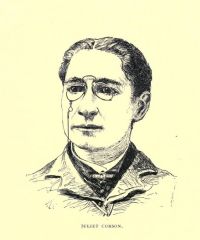 Juliet Corson,
Twenty-Five Cent Dinners for Families of Six
Juliet Corson,
Twenty-Five Cent Dinners for Families of Six
“ All fruit should be bought ripe and sound; it is poor economy to buy imperfect or decayed kinds, as they are neither satisfactory nor healthy eating; while the mature, full flavored sorts are invaluable as food. ”
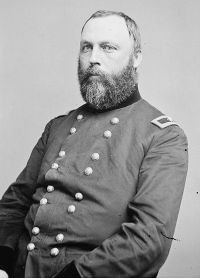 William A. Hammond,
Fasting Girls: Their Physiology and Pathology
William A. Hammond,
Fasting Girls: Their Physiology and Pathology
“ A little food with such a one goes a great way, the demands of the system are at their minimum, and hence a mouthful of bread, or a little tea and toast taken at long intervals, suffices for the supply of all, or a great portion of the waste of the body. ”
Boyd Henry Bode, Creative Intelligence: Essays in the Pragmatic Attitude
“ But if we keep to the plane of final consumption, there appears a second sort of situation. Our interest in the commodity before us may be due to a suggestion of some sort that prompts us to take a step beyond the limits that our present formed desires mark out. ”
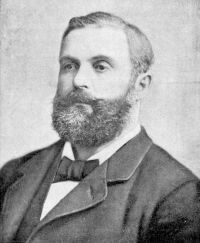 Thomas Wallace Knox,
The Story Teller of the Desert…
Thomas Wallace Knox,
The Story Teller of the Desert…
“ I was told by persons who understand the language, that there is much poetry in its every-day use, and the water carrier, as I have just explained, is poetical in his appeals, and so are the street peddlers of all grades. The venders of vegetables, of candy, of bread, and other edibles do not, as a general thing, name the articles they have for sale, but they address appeals to the hungry, allude to the tortures of hunger, and the pleasure of satisfying it. ”
