Summary

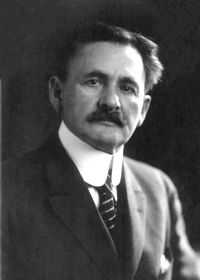
Portrait of Albert A. Michelson Albert A. Michelson Experimental Determination of the Velocity of Light

In other words, besides the image coinciding with a, there would be two images, one on either side of a, and in case there were more than two portions having different inclinations there would be formed as many images to correspond. If the surfaces are not plane, the only effect is to produce a distortion of the image.
As no multiplication of images was observed, and no distortion of the one image, it follows that the distortion of the mirror was too small to be noticed, and that even if it were larger it could not affect the deflection.
Source: Gutenberg

Portrait of Albert A. Michelson Albert A. Michelson Experimental Determination of the Velocity of Light

If the speed of rotation varied in the same manner in each revolution of the mirror, the chances would be that, at the particular time when the reflection took place, the speed would not be the same as the average speed found by the calculation. Such a periodic variation could only be caused by the influence of the frame or the pivots. For instance, the frame would be closer to the ring which holds the mirror twice in every revolution than at other times, and it would be more difficult for the mirror to turn here than at a position 90° from this.
Source: Gutenberg

Portrait of Albert A. Michelson Albert A. Michelson Experimental Determination of the Velocity of Light

If, now, R be turned about the axis, so long as the light falls upon the lens, an image of the slit will still be formed on the surface of the mirror, though on a different part, and as long as the returning light falls on the lens an image of this image will be formed at S, notwithstanding the change of position of the first image at M. This result, namely, the production of a stationary image of an image in motion, is absolutely necessary in this method of experiment.
Source: Gutenberg

Get perspective with Kwize: daily news enlightened by great literature