Summary

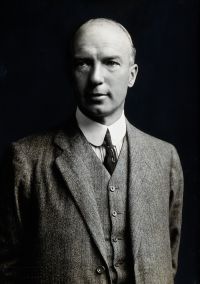
Portrait of Alexis Thomson Alexis Thomson Manual of Surgery, Sixth Edition… (1921)

While the varieties of gangrene included in this group depend primarily on interference with the circulation, it is to be borne in mind that the clinical course of the affection may be profoundly influenced by superadded infection with micro-organisms. Although the bacteria do not play the most important part in producing tissue necrosis, their subsequent introduction is an accident of such importance that it may change the whole aspect of affairs and convert a dry form of gangrene into one of the moist type.
Source: Wikisource

Portrait of Alexis Thomson Alexis Thomson Manual of Surgery, Sixth Edition… (1921)

It is the most characteristic example of the dry type of gangrene. As the term indicates, it occurs in old persons, but the patient's age is to be reckoned by the condition of his arteries rather than by the number of his years. Thus the vessels of a comparatively young man who has suffered from syphilis and been addicted to alcohol are more liable to atheromatous degeneration leading to this form of gangrene than are those of a much older man who has lived a regular and abstemious life. This form of gangrene is much more common in men than in women.
Source: Wikisource

Portrait of Alexis Thomson Alexis Thomson Manual of Surgery, Sixth Edition… (1921)

From what has been said, it will be gathered that in dry gangrene there is no urgent call for operation to save the patient's life, the primary indication being to prevent the access of bacteria to the dead part, and especially to the surface exposed at the line of demarcation. In moist gangrene, on the contrary, organisms having already obtained a footing, immediate removal of the dead and dying tissues, as a rule, offers the only hope of saving life.
Source: Wikisource

Get perspective with Kwize: daily news enlightened by great literature