Thrombus

Definition and stakes

Auguste Renouard,  The undertakers' manual (1878)

“ A thrombus is a clot, composed principally of the fibrine of the blood, formed during life in the cavities of the heart, the arteries, the veins, or the capillaries.
An embolus is a solid body, usually a portion of a thrombus, carried by the blood current into some artery or capillary, and becomes fixed there. A [Pg 72] thrombus may entirely fill the cavity of a vessel, or it may only form a layer on its wall, or it may project from a smaller vessel into a larger one.
”
Source: Gutenberg

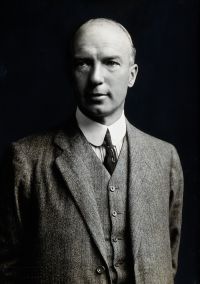
Portrait of Alexis Thomson Alexis Thomson,  Manual of Surgery, Sixth Edition… (1921)

“ The larger the varix the greater is the tendency for a thrombus to spread upwards and to involve the deep veins. Thrombi usually originate in venous cysts or pouches, and at acute bends on the vessel, especially when these are situated in the vicinity of the knee, and are subjected to repeated injuries--for example in riding. Phleboliths sometimes form in such pouches, and may be recognised in a radiogram. In a certain proportion of cases, especially in elderly people, the occurrence of thrombosis leads to cure of the condition by the thrombus becoming organised and obliterating the vein. ”
Source: Wikisource

A system of practical medicine…

“ Organization is the transformation of the thrombus into a mass of fibrous tissue. This is accomplished, according to the researches of Baumgarten,21 by an outgrowth of endothelium from the intima of the vessel, the thrombus being absorbed as the growth of tissue advances. In the case of a thrombus due to the ligation of a vessel, a granulation-tissue also makes its way into the thrombus between the ruptured coats, and the new-formed fibrous tissue which replaces the thrombus becomes vascularized through this granulation-tissue. ”
Source: Gutenberg

Get perspective with Kwize: daily news enlightened by great literature