Coagulation

Definition and stakes

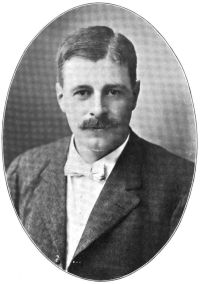
Thomas Henry Huxley and Peter Chalmers Mitchell,  1911 Encyclopædia Britannica (1910)

“ Recent investigations point to the conclusion that the immediate cause of the arrest of vitality, in the first place, and of its destruction, in the second, is the coagulation of certain substances in the protoplasm, and that the latter contains various coagulable matters, which solidify at different temperatures. And it remains to be seen, how far the death of any form of living matter, at a given temperature, depends on the destruction of its fundamental substance at that heat, and how far death is brought about by the coagulation of merely accessory compounds. ”

Source: Wikisource

Joseph Lister,  The third Huxley lecture: delivered before the Medical School of Charing Cross Hospital (1907)

“ Now we know, from the experiment with the ox's jugular, that coagulation is propagated with extreme slowness, if at all, from a clot in blood perfectly undisturbed. The earlier coagulation of the main mass of the stirred blood was, therefore, not caused by propagation of the process from a layer upon the surface of the jar, but must have been the result of the brief agency of the glass rod. ”
Source: Wikisource

Sidney Morgan,  The Preparation of Plantation Rubber

“ This is due to the fact that, as coagulation is immediate upon the spot which is first touched by the pure acid, a deal of the acid is enclosed within the rubber at that spot, and hence other portions of the latex are deprived of acid. It is in such cases that most air-bubbles are enclosed.
As the dilution of the acid solution is increased the mixing is more thorough and uniform. Coagulation is slower, and air-bubbles can escape to the surface.
”
Source: Gutenberg

Get perspective with Kwize: daily news enlightened by great literature