Blister

Definition and stakes

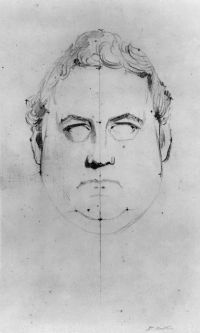
Portrait of Thomas Lauder Brunton Thomas Lauder Brunton,  Popular Science Monthly (1879)

“ Having said so much on reflex action as a cause of disease, we will now consider it as a method of cure; and the first instance that suggests itself to our minds is the beneficial effect of a blister. Two theories have been proposed to account for the action of a blister. One is, that it dilates the vessels of the skin in the part to which it is applied, and, by thus drawing away some of the blood from the inflamed organ below, lessens the pain and inflammation in it. The other theory is, that the blister acts reflexly upon the organ itself. ”

Source: Wikisource

N. D. Falck,  The Seaman's Medical Instructor

“ But to proceed; if the patient continues to be dry on the surface of the skin, and perspiration seems backward, a blister betwixt the shoulders, the bigness of the palm of the hand [15] , will greatly facilitate the crisis or turn of the fever; but let it not be erroneously supposed, that a blister will draw off the bad humour, or that it does good by such an operation; for this notion has proved destructive to many patients. All the good a blister does is to spur on the animal function; by which sometimes the acrimony is thrown off from the system ”
Source: Gutenberg

Portrait of Erasmus Darwin Erasmus Darwin,  Zoonomia; Or, the Laws of Organic Life…

“ The rationale of this is to be explained from a medical fact, which I have frequently observed; and that is, that a blister on the back greatly strengthens the power of digestion, and removes the heart-burn in adults, and green stools in children. The stimulus of the blister produces sensation in the vessels of the skin; with this additional sensorial power these vessels act more strongly; and with these the vessels of the internal membranes of the stomach and bowels act with greater energy from their direct sympathy with them. ”
Source: Gutenberg

Get perspective with Kwize: daily news enlightened by great literature