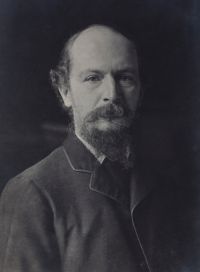
Algernon Charles Swinburne

Algernon Charles Swinburne

Summary

Portrait of Algernon Charles Swinburne Algernon Charles Swinburne 1911 Encyclopædia Britannica, Volume 13… (1911)

The unfinished poems, Dieu and La Fin de Satan, are full to overflowing of such magnificent work, such wise simplicity of noble thought, such heroic and pathetic imagination, such reverent and daring faith, as no other poet has ever cast into deathless words and set to deathless music. Les Jumeaux, an unfinished tragedy, would possibly have been the very greatest of his works if it had been completed on the same scale and on the same lines as it was begun and carried forward to the point at which it was cut short for ever.
Source: Wikisource

Portrait of Algernon Charles Swinburne Algernon Charles Swinburne 1911 Encyclopædia Britannica, Volume 13… (1911)

Next year the exile of Guernsey published his third great romance, Les Travailleurs de la mer, a work unsurpassed even among the works of its author for splendour of imagination and of style, for pathos and sublimity of truth. Three years afterwards the same theme was rehandled with no less magnificent mastery in L’Homme qui rit; the theme of human heroism confronted with the superhuman tyranny of blind and unimaginable chance, overpowered and unbroken, defeated and invincible.
Source: Wikisource

Portrait of Algernon Charles Swinburne Algernon Charles Swinburne 1911 Encyclopædia Britannica, Volume 13… (1911)

All the poet and all the man spoke out and stood evident in the perfervid patriotism, the filial devotion, the fatherly tenderness, the indignation and the pity, which here find alternate expression in passionate and familiar and majestic song. In 1874 he published his last great romance, the tragic and historic poem in prose called Quatrevingt-treize; a work as rich in thought, in tenderness, in wisdom and in humour and in pathos, as ever was cast into the mould of poetry or of fiction.
Source: Wikisource

Get perspective with Kwize: daily news enlightened by great literature