Summary

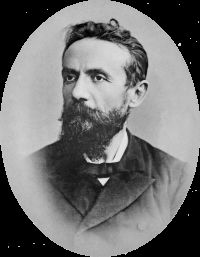
Portrait of Angelo De Gubernatis Angelo De Gubernatis Zoological Mythology; or, The Legends of Animals…

Here the gloomy monster of the night and winter, the monster serpent, appears, in guardianship of the moon, the protectress of marriages, as an ambrosial and evergreen tree, and, like [Pg 410] the cypress, a funereal tree, which is at the same time symbolical of immortality. From the moon of winter and of night, the solar hero of spring and the day, the maiden spring and the maiden aurora come forth. The serpent, like the toad, the frog, the fish, and the bird, now desires the moon of winter and of night for itself, and now presents it to the young hero, whom it protects.
Source: Gutenberg

Portrait of Angelo De Gubernatis Angelo De Gubernatis Zoological Mythology; or, The Legends of Animals…

The evening sun and aurora in the night, the sun and the verdant earth, which divests itself of its varicoloured attire in autumn, veil, cover, and lose themselves; their most vivid hues become obscure in the gloom of night, or are covered by the snow of winter; the hero becomes a dark-coloured dove, or a gloomy swan which crosses the waters. I have noted more than once how the night of the year corresponds to those of the day; the sun which hides itself in the night of evening, and the sun which veils itself in the night of winter, are often represented by the same mythical images.
Source: Gutenberg

Portrait of Angelo De Gubernatis Angelo De Gubernatis Zoological Mythology; or, The Legends of Animals…

It is commonly said of the peacock that it has an angel's feathers, a devil's voice, and a thief's walk. The crow-peacock is proverbial. [471]
The peacock hides itself when it becomes ugly; so does the sky, and so does the sun when the autumnal clouds cover it; but in the summer clouds the thunder rumbles, and thunder made upon the primeval races of men the impression of an irresistible, much-loved, and wished-for music, resembling the song of the melodious kokilas (the cuckoo) , or of the watercock (the heron, the halcyon, the duck, or the swan) .
Source: Gutenberg

Get perspective with Kwize: daily news enlightened by great literature