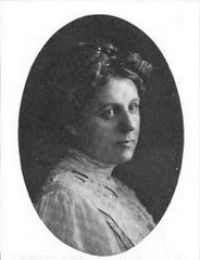
Anna Steese Richardson

Anna Steese Richardson

Summary

Portrait of Anna Steese Richardson Anna Steese Richardson Adventures in Thrift

The trouble is to convince individual stockholders, especially housekeepers, that cooperation eventually spells saving—a lower cost of living. It may be the fault of our bringing up, but we women seek economy in only one of two ways—an actual and considerable reduction in the price of goods sold, or the money we put in the savings bank. We lack the economic vision of the man, which sees money invested, paying a profit six months or a year ahead. The feminine instinct for chasing so-called bargain sales blinds her to the bigger and safer saving which cooperation represents.
Source: Gutenberg

Portrait of Anna Steese Richardson Anna Steese Richardson Adventures in Thrift

To those of us who are in the business, the argument against package goods as increasing the cost of living is absurd. Goods must be prepared for delivery, either in the factory or in the store. The factory, with its labor-saving machinery, can do up dry groceries more rapidly and less expensively than our fastest clerks in the store. Perhaps there was a time when the housekeeper paid extra for containers. To-day she can buy certain package goods as reasonably, and sometimes more cheaply, than bulk goods.
Source: Gutenberg

Portrait of Anna Steese Richardson Anna Steese Richardson Adventures in Thrift

Our aim is not merely to transfer to the pockets of our shareholders the small net profits made by other storekeepers, but so to manage the journey of food products from source to kitchen as to cut out certain evils from which the housewife suffers—the cost of duplicate or wasted motion, and the adulteration and unsanitary conditions which surround the handling of products. We eliminate many of the cost items of ordinary retail trade in competition, and we protect the society from loss by doing only a cash trade.
Source: Gutenberg

Get perspective with Kwize: daily news enlightened by great literature