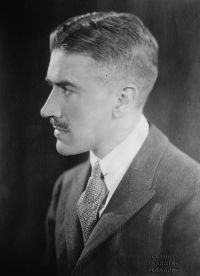
Anthony M. Ludovici

Anthony M. Ludovici

Summary

Portrait of Anthony M. Ludovici Anthony M. Ludovici Nietzsche: His Life and Works

What, now, is the mental attitude of these "backworldsmen," as Nietzsche calls them, who can see only the world's filth? Who is likely to need the thought of a beyond, where he will live in bliss while those he hates will writhe in hell? Such ideas occur only to certain minds. Do they occur to the minds of those who, by the very health, strength, and happiness that is in them, transfigure all the world —even the ugliness in it—and declare it to be beautiful? Do they occur to the powerful who can chastise their enemies while their blood is still up?
Source: Gutenberg

Portrait of Anthony M. Ludovici Anthony M. Ludovici Nietzsche: His Life and Works

Then woe to all those who are tempted to practise one virtue more! Woe to humanity! Woe to the whole world!
There is, on the other hand, a form of egoism, which is both virtuous and noble. It is the egoism of him whose multiplication would make the world better, more desirable, happier, healthier, superior in spirit and body. Egoism in such a case is a moral duty; wherever, in such a case, giving, bestowing—altruism in fact—is not compatible with survival, then egoism becomes the highest principle of all, and it is in such circumstances that altruism may become a vice.
Source: Gutenberg

Portrait of Anthony M. Ludovici Anthony M. Ludovici Nietzsche: His Life and Works

A firm believer in tradition, law, and order, and, in spite of his opponents' accusations, an undaunted enemy of Anarchy and laisser-aller, he saw in Socialism and Democracy nothing more than two slave organisations for the raising of every individual to his highest power, individuality made as general as possible; or, in other words, Socialism and Democracy meant to Nietzsche the annihilation of all higher aims and hopes. It meant valuing all the weeds and noble plants alike, and with such a valuation, the noble plants, being in the minority, must necessarily suffer and ultimately die out.
Source: Gutenberg

Get perspective with Kwize: daily news enlightened by great literature