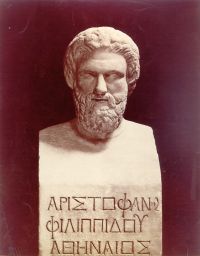
Aristophanes

Aristophanes

Summary

Portrait of Aristophanes Aristophanes The Comedies of Aristophanes (1853)

PRAXAGORA: No, I call the goddesses to witness! I went running off; the poor woman who summoned me begged me to come, whatever might betide.
BLEPYRUS: And why did you not take your mantle? Instead of that, you carry of mine, you throw your dress upon the bed and you leave me as the dead are left, bar the chaplets and perfumes.
PRAXAGORA: It was cold, and I am frail and delicate; I took your cloak for greater warmth, leaving you thoroughly warm yourself beneath your coverlets.
Source: Wikisource

Portrait of Aristophanes Aristophanes The Comedies of Aristophanes (1853)

But he was born before the decree was carried, so that you have not to fear his kiss.
BLEPYRUS: It would be awful. But who will till the soil?
PRAXAGORA: The slaves. Your only cares will be to scent yourself, and to go and dine, when the shadow of the gnomon is ten feet long on the dial.
BLEPYRUS: But how shall we obtain clothing? Tell me that!
PRAXAGORA: You will first wear out those you have, and then we women will weave you others.
BLEPYRUS: Now another point: if the magistrates condemn a citizen to the payment of a fine, how is he going to do it?
Source: Wikisource

Portrait of Aristophanes Aristophanes The Comedies of Aristophanes (1853)

PRAXAGORA to the audience: Let none contradict nor interrupt me until I have explained my plan. I want all to have a share of everything and all property to be in common; there will no longer be either rich or poor; no longer shall we seen one man harvesting vast tracts of land, while another has not ground enough to be buried in, nor one man surround himself with a whole army of slaves, while another has not a single attendant; I intend that there shall only be one and the same condition of life for all.
Source: Wikisource

Get perspective with Kwize: daily news enlightened by great literature