Summary

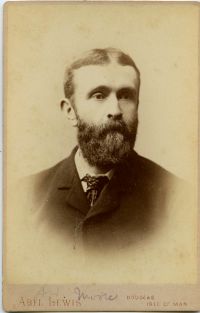
Portrait of Arthur William Moore Arthur William Moore 1911 Encyclopædia Britannica, Volume 17… (1911)

Rising almost directly from the sea, they appear higher than they really are, and therefore present a much more imposing appearance than many hills of greater altitude. On the south-west, where they descend precipitously into the sea, they unite with the cliffs to the north and south of them to produce the most striking part of the coast scenery for which the isle is remarkable. But, indeed, the whole coast from Peel round by the Calf, past Castletown and Douglas to Maughold Head, near Ramsey, is distinguished by rugged grandeur.
Source: Wikisource

Portrait of Arthur William Moore Arthur William Moore 1911 Encyclopædia Britannica, Volume 17… (1911)

There are no lakes. The narrow, winding glens thus formed, which are studded with clumps of fir, sycamore and mountain ash, interspersed with patches of gorse, heather and fern, afford a striking and beautiful contrast to the bare mountain tops. Traces of an older system of drainage than that which now exists are noticeable in many places, the most remarkable being the central depression between Douglas and Peel. The chief bays are, on the east coast, Ramsey, with an excellent anchorage, Laxey, Douglas, Derbyhaven, Castletown and Port St Mary
Source: Wikisource

Portrait of Arthur William Moore Arthur William Moore 1911 Encyclopædia Britannica, Volume 17… (1911)

Early in the 13th century, when Reginald of Man did homage to King John, we hear for the first time of English intervention in the affairs of Man. But it was into the hands of Scotland that the islands were ultimately to fall. During the whole of the Scandinavian period the isles were nominally under the suzerainty of the kings of Norway, but they only occasionally asserted it with any vigour.
Source: Wikisource

Get perspective with Kwize: daily news enlightened by great literature