Summary

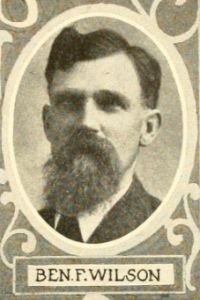
Portrait of Benjamin Franklin Wilson Benjamin Franklin Wilson The Parthenon at Athens, Greece and at Nashville…

The Parthenon at Athens was not merely a wonderful building, but was an expression of Greek mind and heart. It did not spring up in a day as did Athena from the head of Zeus but found its roots in the prehistoric altars of their goddess. It was not built to please individuals but to honor their gods. It is no wonder, then, that when the Parthenon came into full flower in the “Age of Pericles” it should have reached that state which the judgment of succeeding generations has pronounced perfection.
The Parthenon at Nashville stands alone as a portrayal of the Parthenon of Pericles.
Source: Gutenberg

Portrait of Benjamin Franklin Wilson Benjamin Franklin Wilson The Parthenon at Athens, Greece and at Nashville…

Last, in the extreme north angle of the pediment, in the evening, is seen the gentle Selene, the goddess of the moon, the goddess of the evening, guiding her tired steeds, so different from those seen coming out of the sea in the morning, down into the cool, quiet waters of the deep, typifying not alone the close of the day but the close of the reign of Athena and the end of time.
The gods of the Greeks are no more.
Source: Gutenberg

Portrait of Benjamin Franklin Wilson Benjamin Franklin Wilson The Parthenon at Athens, Greece and at Nashville…

The sculptures of the Parthenon occur in four groups: the Ionic or inner frieze, the Doric or outer frieze, the east pediment, and the west pediment.
As the subtlety of the builders of the Parthenon emphasized their intellect, so the sculptures emphasized their religion. The Greeks were not idolaters in the sense that they bowed down to gold and ivory. They loved to chisel in marble the beautiful forms that represented to them their gods who dwelt on Mount Olympus.
Source: Gutenberg

Get perspective with Kwize: daily news enlightened by great literature