Summary

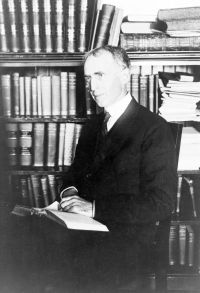
Portrait of Charles A. Beard Charles A. Beard An Economic Interpretation of the Constitution of the United States… (1913)

The conclusion to be reached from this evidence is that Hamilton did not have in 1787 any more than a petty amount of public securities which might appreciate under a new system; that he did have some western land; but that an extensive augmentation of his personal fortune was no consideration with him. The fact that he died a poor man is conclusive evidence of this fact. That he was sway throughout the period of the formation of the Constitution by large policies of government - not by any of the personal interests so often ascribed to him - must therefore be admitted.
Source: Wikisource

Portrait of Charles A. Beard Charles A. Beard An Economic Interpretation of the Constitution of the United States… (1913)

It was fortunate for the new government to have in its support a man whose economic power and personal acquaintanceship extended from New Hampshire to Georgia. It seems fair to say that no man contributed more to the establishment of our Constitution and the stability of our national institutions than Robert Morris, " the Patriot Financier."
Source: Wikisource

Portrait of Charles A. Beard Charles A. Beard An Economic Interpretation of the Constitution of the United States… (1913)

Later in the Convention, when Colonel Mason objected to making the full discharge of the debt obligatory, Gerry again took exceptions. He said, " that for himself he had no interest in the question, being not possessed of more of the securities than would by the interest pay his taxes. He would observe, however, that as the public had received the value of the literal amount, they ought to pay that value to somebody. The frauds on the soldiers ought to have been foreseen. These poor and ignorant people could not but part with their securities.
Source: Wikisource

Get perspective with Kwize: daily news enlightened by great literature