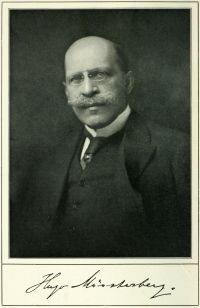
The Library of Congress, founded in 1800 as the research library of the U.S. Congress, grew to become the world’s largest library and a symbol of national intellectual aspiration. Authors such as Ainsworth Rand Spofford stressed its function as a custodian of rare manuscripts, while Hugo Münsterberg pointed out its broadening scope beyond political and scientific holdings. The U.S.
Government’s legal structure emphasizes its administrative function, and historians like Charles Ramsdell Lingley observe its expansion after the Civil War as a public institution. Carl Schurz foresaw its potential to become the greatest library in the world, highlighting its dual character as both a tool for Congress and a source of universal knowledge. Its development—from Jefferson’s acquisitions to a modern, extensive collection—reveals a conflict between specialized service and a wider role in cultural preservation.
 Ainsworth Rand Spofford,
A Book for All Readers
Ainsworth Rand Spofford,
A Book for All Readers