Summary

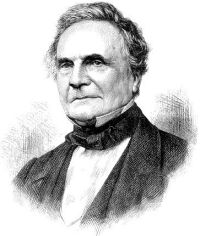
Portrait of Charles Babbage Charles Babbage Reflections on the Decline of Science in England (1830)

In a work on the Decline of Science, at a period when England has so recently lost two of its brightest ornaments, I should hardly be excused if I omitted to devote a few words to the names of Wollaston and of Davy. Until the warm feelings of surviving kindred and admiring friends shall be cold as the grave from which remembrance vainly recalls their cherished forms, invested with all the life and energy of recent existence, the volumes of their biography must be sealed. Their contemporaries can expect only to read their éloge.
Source: Wikisource

Portrait of Charles Babbage Charles Babbage Reflections on the Decline of Science in England (1830)

It is not within the province of one who, having mixed sufficiently with scientific society in England to see and regret the weakness of some of its greatest ornaments, and to see through and deplore the conduct of its pretended friends, offers these remarks, with the hope that they may excite discussion,—with the conviction that discussion is the firmest ally of truth,—and with the confidence that nothing but the full expression of public opinion can remove the evils that chill the enthusiasm, and cramp the energies of the science of England.
Source: Wikisource

Portrait of Charles Babbage Charles Babbage Reflections on the Decline of Science in England (1830)

At the time of the discovery of the beautiful theorem of Huygens, it required in its author not merely a complete knowledge of the mathematical science of his age, but a genius to enlarge its boundaries by new creations of his own. Such talents are not always united with a quick perception of the details, and of the practical applications of the principles they have developed, nor is it for the interest of mankind that minds of this high order should lavish their powers on subjects unsuited to their grasp.
Source: Wikisource

Get perspective with Kwize: daily news enlightened by great literature