Summary

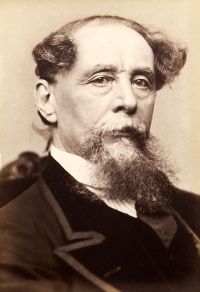
Portrait of Charles Dickens Charles Dickens The Poems and Verses of Charles Dickens

The Patrician’s Daughter was the title bestowed upon a play, in the tragic vein, by a then unknown writer, J. Westland Marston, it being his maiden effort in dramatic authorship. Dickens took great interest in the young man and indicated a desire to promote the welfare of his production by composing some introductory lines. To Macready he wrote: ‘The more I think of Marston’s play, the more sure I feel that a prologue to the purpose would help it materially, and almost decide the fate of any ticklish point on the first night.
Source: Gutenberg

Portrait of Charles Dickens Charles Dickens The Poems and Verses of Charles Dickens

Dickens explained that ‘the libretto of an opera must be, to a certain extent, a mere vehicle for the music,’ and that ‘it is scarcely fair or reasonable to judge it by those strict rules of criticism which would be justly applicable to a five-act tragedy or a finished comedy.’ There is no doubt that the merits of the play were based upon the songs set to Hullah’s music rather than upon the play itself, [Pg 5] and it is said that Harley’s reputation as a vocalist was established by his able rendering of them.
Source: Gutenberg

Portrait of Charles Dickens Charles Dickens The Poems and Verses of Charles Dickens

The Village Coquettes enjoyed a run of nineteen nights in London during the season, and was then transferred to Edinburgh, where it was performed under the management of Mr. Ramsay, a friend of Sir Walter Scott. Sala, as a boy of ten, witnessed its first representation in London, and ever retained a vivid impression of the event; while especial interest appertains to the fact that a copy of the play became the means of first bringing Dickens into personal communication with John Forster, his life-long friend and biographer.
Source: Gutenberg

Get perspective with Kwize: daily news enlightened by great literature