Summary

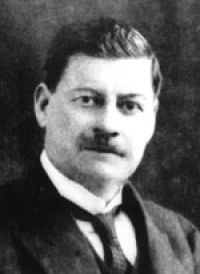
Portrait of Charles Eliot Charles Eliot The Empire and the century — The East African Protectorate (1905)

In crossing Kikuyu the train reaches an altitude of about 7,500 feet, and then suddenly descends into the Rift Valley. Probably there is no place in the world where a railway effects such a sudden and thorough transformation of scenery without the aid of a tunnel. The line makes a great curve, and almost in the space of a minute passes from the fertile, comfortable fields of Kikuyu and emerges on the sides of a wild, desolate, wind-swept valley, bounded by strange volcanic mountains.
Source: Wikisource

Portrait of Charles Eliot Charles Eliot The Empire and the century — The East African Protectorate (1905)

On the mountains of the Man, which are actually on the Equator, the days often resemble an English October, and at night there may be a degree or two of frost. The salient feature in the geography of East Africa is that volcanic action has thrown up a plateau, varying from 5,000 to 10,000 feet high, between the sea and the great lakes, which are largely formed from the waters which run down from this elevation. In British territory this plateau begins about 200 miles from the coast and extends about 800 miles in the direction of Lake Victoria.
Source: Wikisource

Portrait of Charles Eliot Charles Eliot The Empire and the century — The East African Protectorate (1905)

For purposes of colonization and cultivation, the Protectorate may be divided into two parts—the highlands composed of this plateau and of the Rift Valley, and the lowlands, consisting of the coast and the country round the shores of Lake Victoria. The lowlands must be regarded as a planter's country, suitable for most forms of tropical agriculture, but not for the permanent residence of Europeans, though they can perfectly well reside there and superintend cultivation. The shores of Lake Victoria are not healthy, though it is hoped that they may be much improved by drainage.
Source: Wikisource

Get perspective with Kwize: daily news enlightened by great literature