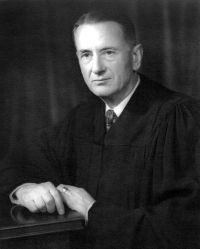
Charles Evans Whittaker

Charles Evans Whittaker

Summary

Portrait of Charles Evans Whittaker Charles Evans Whittaker Order of Railroad Telegraphers v…

It is obvious that any abandonment, authorized by a proper regulatory body, will result in abolishment of the jobs that were involved in the abandoned service. And inasmuch as the maintenance of these jobs constituted at least a part of the wasteful burden that necessitated the abandonment, it is equally obvious that Congress intended their abolishment. Yet, here, the Union has demanded, and threatens to force by a strike, acceptance by the carrier of a covenant that no job in existence on December 3, 1957, will be abolished without its consent.
Source: Wikisource

Portrait of Charles Evans Whittaker Charles Evans Whittaker Order of Railroad Telegraphers v…

It is not to be doubted that a carrier and a labor union representing the carrier's employees, lawfully may bargain about and agree upon matters in mitigation of hardships to employees who are displaced by railroad unifications or abandonments; but they may not agree, nor may any regulatory body order, that no jobs shall be abolished, and thus defeat unifications or abandonments required in the public interest.
Source: Wikisource

Portrait of Charles Evans Whittaker Charles Evans Whittaker Order of Railroad Telegraphers v…

On August 20, North Western filed a complaint against the Union and various of its officials in the United States District Court for the Northern District of Illinois, alleging that the Union's contract demand was not a lawfully bargainable subject under the Railway Labor Act; that the impending strike, called to force acceptance of that demand by North Western, would be illegal; that North Western had a right arising under the laws of the United States, particularly the Interstate Commerce Act and the Railway Labor Act, to be free of such an illegal strike, and it prayed that it be enjoined.
Source: Wikisource

Get perspective with Kwize: daily news enlightened by great literature