Summary

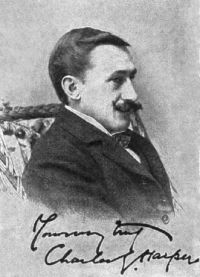
Portrait of Charles G. Harper Charles G. Harper The Smugglers: Picturesque Chapters in the Story of an Ancient Craft

There is nothing more ridiculous, in the eyes of those who live upon our sea-coasts, than to witness the tender sensibilities of officers employed upon the coast-blockade whenever a statement is made that a smuggler has succeeded in landing his cargo; as though they formed a part of the most perfect system that can be established for the suppression of smuggling.
Source: Gutenberg

Portrait of Charles G. Harper Charles G. Harper The Smugglers: Picturesque Chapters in the Story of an Ancient Craft

Talland, midway between Polperro and Looe, was a favourite spot with these daring Polperro fellows. It offered better opportunities than those given by Polperro itself for unobserved landings; for it was—and it still is—a weird, lonely place, overhanging the sea, with a solitary ancient church well within sound of the waves that beat heavily upon the little sands. It was an easy matter to store kegs in the churchyard itself, and to take them inland, or into Polperro by the country roads, when opportunity offered, hidden in carts taking seaweed for manure to the fields.
Source: Gutenberg

Portrait of Charles G. Harper Charles G. Harper The Smugglers: Picturesque Chapters in the Story of an Ancient Craft

It naturally killed smuggling so far as duty-free articles were concerned; but this all-embracing term of “Free Trade” is altogether a mockery and a delusion. There has never been—there is not now—complete Free Trade in this so-called free-trade country. Wines and spirits, tobacco, tea and coffee, cocoa and sugar, are not they in the forefront of the articles that render regularly to the Chancellor of the Exchequer? There have been, indeed, throughout all the years of the Free Trade era, some forty articles scheduled for paying customs duty on import into the United Kingdom.
Source: Gutenberg

Get perspective with Kwize: daily news enlightened by great literature