Summary

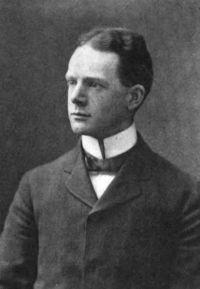
Portrait of Charles Warren Charles Warren The Supreme Court in United States History (1922)

No one can read the history of the Court's career without marveling at its potent eflfect upon the political development of the Nation, and without concluding that the Nation owes most of its strength to the determination of the Judges to maintain the National supremacy. Though, from time to time, Judges have declared that the preservation of the sovereignty of the States in their proper sphere was as important as the maintenance of the rights vested in the Nation, nevertheless, the Court's actual decisions at critical periods have steadily enhanced the power of the National Government
Source: Wikisource

Portrait of Charles Warren Charles Warren The Supreme Court in United States History (1922)

It cannot be too strongly impressed on the minds of all how greatly our individual prosperity depends on our National prosperity, and how greatly our National prosperity depends on a well-organized, vigorous government, ruling by wise and equal laws, faithfully executed. Nor is such a government unfriendly to liberty—that liberty which is really estimable. On the contrary, nothing but a strong government of laws, irresistibly bearing down arbitrary power and licentiousness, can defend it against those two formidable enemies.
Source: Wikisource

Portrait of Charles Warren Charles Warren The Supreme Court in United States History (1922)

It has been sometimes remarked that the existence of the judicial power has unquestionably tended to cause Congress to evade its own responsibility, and to enact statutes the constitutional validity of which it doubted, relying on the Court to hold them invalid. " There is every reason to think that Legislatures have passed bills, knowing them to be unconstitutional, in order to place the onus of declaring them so on the Courts."
Source: Wikisource

Get perspective with Kwize: daily news enlightened by great literature