Summary

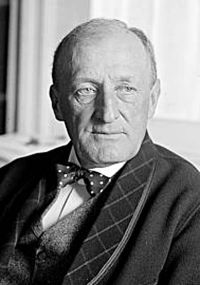
Portrait of James Clark McReynolds James Clark McReynolds Southern Pacific Company v. Jensen…

I freely concede the authority of Congress to modify the rules of maritime law so far as they are administered in the Federal courts, and to make them binding upon the courts of the states so far as they affect interstate or international relations, or regulate 'commerce with foreign nations, and among the several states, and with the Indian tribes.' What I contend is that the Constitution does not, proprio vigore, impose the maritime law upon the states except to the extent that the admiralty jurisdiction was exclusive of the courts of common law before the Constitution
Source: Wikisource

Portrait of James Clark McReynolds James Clark McReynolds Southern Pacific Company v. Jensen…

Surely it cannot be that the mere grant of judicial power in admiralty cases, with whatever general authority over the subject-matter can be raised by implication, can, in the absence of legislation, have a greater effect in limiting the legislative powers of the states than that which resulted from the express grant to Congress of an authority to regulate interstate commerce, the limited effect of which, in the absence of legislation by Congress, we already have seen.
Source: Wikisource

Portrait of James Clark McReynolds James Clark McReynolds Southern Pacific Company v. Jensen…

In describing the judicial power, the framers of our Constitution had not in view any cession of territory, or, which is essentially the same, of general jurisdiction. It is not questioned that whatever may be necessary to the full and unlimited exercise of admiralty and maritime jurisdiction is in the government of the Union. Congress may pass all laws which are necessary and proper for giving the most complete effect to this power.
Source: Wikisource

Get perspective with Kwize: daily news enlightened by great literature