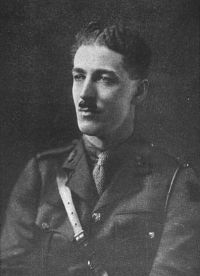
Coningsby Dawson

Coningsby Dawson

Summary

Portrait of Coningsby Dawson Coningsby Dawson The Little House

Our square is so shut in and small that it echoes like a church; every sound is startling and can be heard in every part of it. I could not see to whom the footsteps belonged on account of the trees and the darkness. They entered on the side farthest from me, from the street where the red motor-buses pass. When they had reached the top, from which there is no exit, they hesitated; then came hurrying back along the side on which they would have to pass me. Tip-a-tap, tip-a-tap, tip-a-tap and panting breath—the sound of a woman's high-heeled shoes against the pavement.
Source: Gutenberg

Portrait of Coningsby Dawson Coningsby Dawson The Little House

Because we are so small, we are sometimes spoken of as “Dolls' House Square.” All the things that I shall tell you I do not pretend to have witnessed, for houses have to spend their lives always in the one place—they cannot ride in taxis and move about. We gain our knowledge of how the world is changing by listening to the conversations of people who inhabit us; when night has fallen we mutter among ourselves, passing on to one another beneath the starlight down the lamp-lit streets the gossip we have overheard.
Source: Gutenberg

Portrait of Coningsby Dawson Coningsby Dawson The Little House

She saw herself growing old. The children would spring up so quickly. She would be left with her pride, to dress and make herself beautiful for an anonymous someone whose coming was indefinitely postponed. Youth would go from her. For interminable evenings, stretching into decades, she would watch afternoons fade into evenings. Everything would grow quiet. She would sit beneath the lamp at her sewing. The whispering parrot would take pity on her and croak, “What shall we talk about?” Even that game would end one day, for Robbie would become a man and marry.
Source: Gutenberg

Get perspective with Kwize: daily news enlightened by great literature