Summary

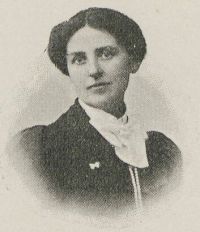
Portrait of Dora Russell Dora Russell Hypatia; or, woman and knowledge (1925)

Can we not persuade Jason from barbarity and Admetus to the abandonment of his fears? To live with [80] vigour, body and mind and imagination, without fear or shame or dread of death; to drive these baser passions from the hold they have upon our morality and our politics—this is what we ask of modern men and women. They can come to it only in a reckless love of one another, a passion that gives again and again without fear of hurt or exhaustion. It is not an abandonment to nature and to instinct that we need. Pure and barbaric instinct is no more.
Source: Gutenberg

Portrait of Dora Russell Dora Russell Hypatia; or, woman and knowledge (1925)

Our bodies are too much impregnated by inherited habit and knowledge, too much surrounded in their growth by the findings of science. Men and women are not creatures of clay, nor disembodied spirits; but things of fire intertwining in understanding, torrents leaping to join in a cascade of mutual ecstacy. There is nothing in life to compare with this uniting of minds and bodies in men and women who have laid aside hostility and fear and seek in love the fullest understanding of themselves and of the universe.
Source: Gutenberg

Portrait of Dora Russell Dora Russell Hypatia; or, woman and knowledge (1925)

Thirty shillings a week and typing or working in a shop, a still tongue, or a toss of the head and the assertion that independence is the best; and, in the background a lover with whom somehow evenings are spent—a lover who has no claim and cannot tyrannize. A lover, perhaps, who pleads to become a husband, but has no chance unless his income is good or secure. Marriage would change him: Aspasia knows it. Marriage would also rob her of that thirty shillings a week, which alone stands between her and the abyss of primeval submission.
Source: Gutenberg

Get perspective with Kwize: daily news enlightened by great literature