Summary

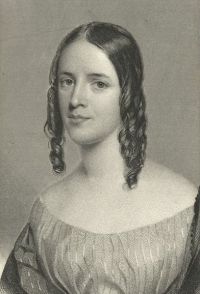
Portrait of E. F. Ellet E. F. Ellet Women artists in all ages and countries (1859)

The second can not be mistaken; even the most unpracticed eye would discern at a glance that it is a Frenchwoman—piquant, lively, graceful, evidently not so much engrossed with her art as to be insensible to admiration as a woman—this is the well-known Madame Le Brun. Opposite the fair Parisian is a third portrait, a woman still in the bloom of life, but destitute of all brilliancy of coloring, with an expression grave and pensive almost to melancholy. She is seated on a stone, in the midst of a solitary landscape, a portfolio with sketches in one hand, a pencil in the other.
Source: Gutenberg

Portrait of E. F. Ellet E. F. Ellet Women artists in all ages and countries (1859)

A place among the most gifted and the most illustrious women who, in any country or in any age, have devoted themselves to the fine arts, must be accorded to Elisabetta Sirani. She has been pronounced a complete artist; unrivaled by any of her sex in fertility of invention, in the power of combining parts in a noble whole, in knowledge of drawing and foreshortening, and in the minute details that contribute to the perfection of a painting. Had she lived longer, she would have equaled any painter of her time.
Source: Gutenberg

Portrait of E. F. Ellet E. F. Ellet Women artists in all ages and countries (1859)

There may be aspiration without genius; there can not be genius without aspiration; and where genius is backed by industry and perseverance, the aspiration of one period will meet its realization in another.
To go to Rome—to make herself acquainted with all its treasures of art, ancient and modern—to study and work as the masters of both periods had studied and worked before her—this was now our youthful artist’s ambition
Source: Gutenberg

Get perspective with Kwize: daily news enlightened by great literature