Summary

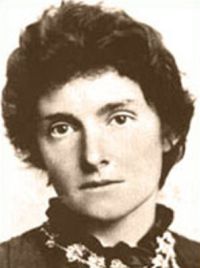
Portrait of E. Nesbit E. Nesbit Salome and the Head — II. Limelight (1909)

London was quite mad about these dancers, bare behind their veils, or with no veils at all, who strove to reproduce the spirit of the old classic dances. London was quite mad. He, proudly, was sane. For he had seen a dancer to whom these others were as wooden puppets jerked by strings almost visible. He knew, better than anyone in the world, what dancing should be. He alone, in all London, knew it. For he alone had seen a little brown dancer in a forest glade.
Source: Wikisource

Portrait of E. Nesbit E. Nesbit Salome and the Head — II. Limelight (1909)

For Sylvia was Sandra, who had been a brown witch-child, and was now a white witch-girl crowned with beauty as with a diadem—a girl with the eyes that you never forget.
The friend shrugged his shoulders and, following, caught up with him on the stairs.
“Who is she?” said Templar abruptly.
“That’s just it. Nobody knows. The charming Sylvia knows the value of a mystery. I say—come back and see the Salome. You’re not seedy, are you?”
“No,” said Templar, “I’ve just remembered an important letter. See it some other day.”
She doesn’t dance every day, you know,” said the friend.
Source: Wikisource

Portrait of E. Nesbit E. Nesbit Salome and the Head — II. Limelight (1909)

Templar saw the free grace of the dancing girl in the forest glade, and he saw the school for difficult and backward girls, with the bars, and the rest of it. He felt a pang of the soul so keen as to be also a pang of the body—the kind of fine thrill of physical sympathy that pierces you when you see a child cut its hand or squeeze its finger in a door.
Source: Wikisource

Get perspective with Kwize: daily news enlightened by great literature