Summary

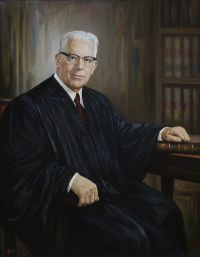
Portrait of Earl Warren Earl Warren Mitchell v. King Packing Company…

Though the entire cost of keeping the saws in proper condition is borne by respondent, the knifemen are required to sharpen their own knives outside the scheduled shift of eight hours, and for this activity they are not compensated. The sharpening of these knives is done either before or after the work shift or during the lunch hour in a room equipped by respondent with an emery wheel and grindstone. A knifeman ordinarily sharpens from two to four knives a day. At the time a man is hired for, or promoted to, a knife job, it is understood that he will be required to sharpen knives.
Source: Wikisource

Portrait of Earl Warren Earl Warren Mitchell v. King Packing Company…

The saws and the more expensive loin pulling, ham skinning, shoulder trimming and sparerib knives are furnished by respondent. All of the knives as well as the saws must be 'razor sharp' for the proper performance of the work. Respondent's production manager and one of the knifemen testified a dull knife would slow down production which is conducted on an assembly line basis, affect the appearance of the meat as well as the quality of the hides, cause waste and make for accidents
Source: Wikisource

Portrait of Earl Warren Earl Warren Mitchell v. King Packing Company…

The court below recognized a conflict with Steiner, [1] and, although holding that Section 4 controls the situation here, determined, contrary to the holding in the Steiner case, that 'the terms 'preliminary' or 'postliminary' cannot be interpreted so as to exclude (from the exemptions from the Act) all activity 'indispensable to the performance of productive work.' To do so would deny effect to the intended meaning of the Portal-to-Portal Act.' [2] We granted certiorari to resolve this conflict.
Source: Wikisource

Get perspective with Kwize: daily news enlightened by great literature