Edward Caird

Edward Caird

Summary

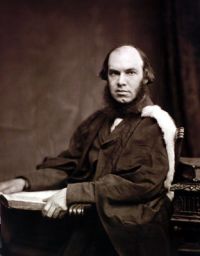
Portrait of Edward Caird Edward Caird 1911 Encyclopædia Britannica (1911)

Thought is not like a picture; it is conscious, and conscious not only of itself, but of extension. It transcends therefore the absolute distinction between itself and other attributes. It is only because he cannot rid himself of the phantom of an extended matter as a thing in itself, which is entirely different from the idea of it, that Spinoza is prevented from recognising in mind that unity that transcends all distinctions, even its own distinction from matter.
Source: Wikisource

Portrait of Edward Caird Edward Caird 1911 Encyclopædia Britannica (1911)

On the other hand, as knowledge advances, this freedom of combination becomes limited, “the less the mind understands and the more it perceives the greater is its power of fiction, and the more it understands the narrower is the limitation of that power. For just as in the moment of consciousness we cannot imagine that we do not think, so after we have apprehended the nature of body we cannot conceive of a fly of infinite size, and after we know the nature of a soul we cannot think of it as a square, though we may use the words that express these ideas.”
Source: Wikisource

Portrait of Edward Caird Edward Caird 1911 Encyclopædia Britannica (1911)

And in order that I might inquire into the matters of this science with the same freedom of mind with which we are wont to treat lines and surfaces in mathematics, I determined not to laugh or to weep over the actions of men, but simply to understand them; and to contemplate their affections and passions, such as love, hate, anger, envy, arrogance, pity and all other disturbances of soul not as vices of human nature, but as properties pertaining to it in the same way as heat, cold, storm, thunder pertain to the nature of the atmosphere.
Source: Wikisource

Get perspective with Kwize: daily news enlightened by great literature