Summary

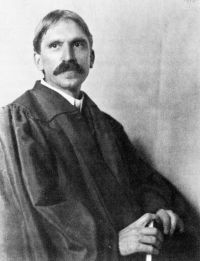
Portrait of John Dewey John Dewey Leibniz's New Essays Concerning the Human Understanding…

In avoiding the monotone of unity which characterizes the thought of Spinoza, has he not fallen into a lawless variety of multiplicity, infinitely less philosophic than even the dualism of Descartes, since it has an infinity of ultimate principles instead of only two? If Spinoza sacrificed the individual to the universe, has not Leibniz, in his desire to emphasize the individual, gone to the other extreme? Apparently we are introduced to a universe that is a mere aggregate of an infinite multiplicity of realities, each independent of every other. Such a universe would not be a universe.
Source: Gutenberg

Portrait of John Dewey John Dewey Leibniz's New Essays Concerning the Human Understanding…

To say that it is an easy matter to decide, is to assume the decision with equal ease of all the problems that have vexed the thought of humanity. To us it seems easy because we have bodily incorporated into our thinking the results of both the realistic and the nominalistic doctrines, without attempting to reconcile them, or even being conscious of the necessity of reconciliation. We assert in one breath that the individual is alone real, and in the next assert that only those forms of consciousness which represent something in the universe are to be termed knowledge.
Source: Gutenberg

Portrait of John Dewey John Dewey Leibniz's New Essays Concerning the Human Understanding…

What is the soul, which has nothing until it gets it from without? The doctrine of a vacuum, an emptiness which is real, is always absurd; and it is doubly so when to this vacuum is ascribed powers of feeling and thinking, as Locke does. Accepting for the moment the metaphor of a tabula rasa, Leibniz asks where we shall find a tablet which yet does not have some quality, and which is not a co-operating cause, at least, in whatever effects are produced upon it? The notion of a soul without thought, an empty tablet of the soul, he says, is one of a thousand fictions of philosophers.
Source: Gutenberg

Get perspective with Kwize: daily news enlightened by great literature