The concept of a monad encompasses both philosophy and computer science, functioning as a foundational framework in distinct yet interconnected ways. In functional programming, a monad serves as a design pattern that organizes computations by enclosing values within a context, allowing for the management of side effects, non-determinism, or possible failures through operations such as return and bind. This abstraction facilitates the linking of operations while preserving clarity and modularity.
Philosophically, the term traces its roots to Leibniz’s Monadology, where monads are indivisible, dynamic entities that form the basis of reality, each reflecting the universe from its unique standpoint. Thinkers such as Paschal Beverly Randolph and John Dewey extended this notion, comparing monads to evolving spiritual or natural units, while others, like A. E. Taylor, discussed their role in metaphysical unity. Whether as computational constructs or metaphysical components, monads highlight a common concern with organizing complexity through basic, self-contained units.
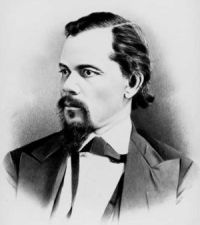 Paschal Beverly Randolph,
Dealings with the Dead
(1861)
Paschal Beverly Randolph,
Dealings with the Dead
(1861)