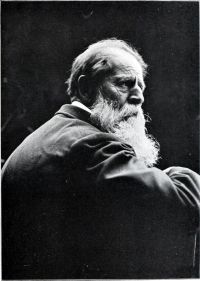
Edward Dalziel

Edward Dalziel

Summary

Portrait of Edward Dalziel Edward Dalziel The Brothers Dalziel

This edition will always be known as "Moxon's Tennyson," and will stand out as a landmark in the history of book illustration. In the work of the younger men engaged on it, beyond the extreme beauty of their designs, there was an evidence of earnestness to search after truth that went so deep into nature as to give the work a stamp of superiority: and this advance in art—for it was an advance—we endeavoured to follow and to promote to the best of our power.
Source: Gutenberg

Portrait of Edward Dalziel Edward Dalziel The Brothers Dalziel

Also, when we look at the reproductions of tint drawings by such men as William Small, De Haenen, the Pagets, Caton Woodville, W. L. and C. Wyllie, Edgar Bundy, Jacomb Hood, and many other artists of distinction, by the half-tone process, and when we think (beyond all this fine artistic work) of the vast mass of wonderful illustration given to the public, week by week, of every conceivable class of subject, direct from the camera, in which the draughtsman has no part at all, and this work is generally of singular beauty and truth—we feel that our occupation is gone.
Source: Gutenberg

Portrait of Edward Dalziel Edward Dalziel The Brothers Dalziel

Harry Fenn took at once to drawing on wood and water colour painting, making very rapid progress in both branches of art, and soon becoming the most popular landscape draughtsman in America. It was he who projected, planned, and made all the drawings for "Picturesque America." It came about in this way. He was dining with the well-known publisher, D. Appleton, who, during conversation, regretted that America did not afford such fine material for landscape art as the Old Country—that there was, in fact, nothing picturesque in America.
Source: Gutenberg

Get perspective with Kwize: daily news enlightened by great literature